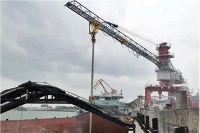
Hey there! As a supplier of Fixed Screw Ship Unloaders, I often get asked if these bad boys can be remotely controlled. Well, let's dive right into it and find out.
First off, what's a Fixed Screw Ship Unloader? It's a piece of heavy - duty equipment used to unload bulk materials like grains, coal, and minerals from ships. The fixed screw design means it's installed in a particular location and uses a screw mechanism to move the materials from the ship's hold to the storage area on land or another transport system.
Now, back to the big question: Can it be remotely controlled? The short answer is yes! In today's tech - savvy world, remote control technology has come a long way. And for Fixed Screw Ship Unloaders, this technology offers a whole bunch of benefits.
One of the main advantages is safety. When you're dealing with large ships and heavy machinery, there are always risks involved. By using remote control, operators can stay at a safe distance from potential hazards like falling materials or mechanical failures. They can monitor and control the unloader from a control room or even a mobile device, reducing the chances of on - site accidents.
Another benefit is efficiency. With remote control, operators can make quick adjustments to the unloader's speed, direction, and other settings without having to physically be at the machine. This means less downtime and faster unloading times. For example, if the material flow is too slow, the operator can increase the screw's rotation speed right away, keeping the whole operation running smoothly.
But how does the remote control system work? Well, it typically consists of a transmitter and a receiver. The operator uses the transmitter to send commands, and the receiver on the unloader interprets these commands and makes the necessary adjustments. The communication between the transmitter and receiver can be through radio waves, Wi - Fi, or other wireless technologies.
There are also advanced features in modern remote control systems. For instance, some systems come with real - time monitoring capabilities. Operators can see the unloader's performance data, such as the amount of material unloaded, the power consumption, and the temperature of key components. This data helps in preventive maintenance and ensures that the unloader is always operating at its best.
Now, you might be thinking about how this compares to other types of ship unloaders. There are different kinds out there, like the Pneumatic Ship Unloader, the Catenary Bucket Unloader, and the Chain Bucket Ship Unloader.
The Pneumatic Ship Unloader uses air pressure to transport the bulk materials. It's a great option for handling fine powders, but it might not be as suitable for large - sized materials. The Catenary Bucket Unloader uses a series of buckets to scoop up the materials. It's known for its high capacity but can be a bit more complex to operate. The Chain Bucket Ship Unloader, as the name suggests, uses a chain - driven system of buckets. It's robust and can handle a variety of materials.
Compared to these, our Fixed Screw Ship Unloader with remote control has its own unique selling points. The screw mechanism provides a continuous and gentle handling of the materials, which is great for reducing material damage. And the remote control feature gives it an edge in terms of safety and efficiency, something that might not be as well - developed in some of the other types.
Of course, like any technology, there are some challenges with remote - controlled Fixed Screw Ship Unloaders. One of the main ones is signal interference. In a busy port environment, there can be a lot of electromagnetic noise that might disrupt the communication between the transmitter and the receiver. However, modern systems are designed with advanced signal - processing algorithms to minimize this issue.
Another challenge is the initial setup and training. Implementing a remote control system requires proper installation and calibration. And operators need to be trained to use the system effectively. But once everything is up and running, the long - term benefits far outweigh these initial hurdles.
If you're in the market for a ship unloader, you might be wondering if a remote - controlled Fixed Screw Ship Unloader is the right choice for you. Well, it depends on your specific needs. If safety, efficiency, and gentle material handling are your top priorities, then it's definitely worth considering.
We've had many customers who have switched to our remote - controlled Fixed Screw Ship Unloaders and have been really happy with the results. They've seen improvements in their unloading operations, from faster turnaround times to reduced labor costs.
So, if you're interested in learning more about our Fixed Screw Ship Unloaders or want to discuss how a remote - controlled system can work for your business, don't hesitate to reach out. We're here to answer all your questions and help you make an informed decision. Whether you're running a small - scale port or a large industrial operation, we've got the right solution for you.
In conclusion, the answer to the question "Can a Fixed Screw Ship Unloader be remotely controlled?" is a resounding yes. With the right technology and setup, it offers a safe, efficient, and reliable way to unload bulk materials from ships. So, why not take advantage of this modern innovation and see the difference it can make in your operations?


Let's start a conversation about how we can meet your ship - unloading needs. Contact us today to get the ball rolling!
References
- Industry reports on ship unloader technologies
- Technical specifications of Fixed Screw Ship Unloaders
- Case studies of companies using remote - controlled ship unloaders