Yo! I'm a supplier of stationary conveyors, and I'm super stoked to chat about an interesting question: Can stationary conveyors separate different types of recyclable materials? It's a topic that's not only cool but also vital in today's world, where recycling and sustainable living are taking center stage.
First off, let's break down what stationary conveyors are. These are conveyor systems that stay in one place, unlike mobile ones that can be moved around. They're designed to transport materials from one point to another within a facility, whether it's a recycling plant, a manufacturing unit, or a warehouse. Now, onto the big question - can they separate recyclables?
The short answer is yes, they can, but it's not as simple as just plopping a conveyor down and expecting it to do all the magic. There are a few different ways stationary conveyors can be part of the separation process.
1. Using Sorting Technologies Alongside Conveyors
One of the most common methods is to pair stationary conveyors with advanced sorting technologies. For instance, optical scanners can be installed above the conveyor. These scanners use sensors and cameras to identify different types of recyclable materials based on their color, shape, and density. Once a specific material is detected, mechanical arms or air jets can be used to divert it into a separate collection bin.
Let's say you have a mix of plastic bottles, aluminum cans, and cardboard on the conveyor. The optical scanner will recognize the unique characteristics of each material. When it spots an aluminum can, it sends a signal to an air jet, which then blows the can off the conveyor into an aluminum collection area. Similarly, plastic bottles and cardboard will be redirected to their respective bins.
2. Utilizing Gravity and Incline
Another way stationary conveyors can help with separation is by using gravity and incline. You can design a conveyor system with different levels and slopes. Material differences in size, shape, and weight will cause them to move at different speeds and along different paths as they travel down the conveyor.
For example, larger and heavier items like old appliances or big chunks of metal will move more steadily down an incline. On the other hand, lighter and smaller materials like paper or thin plastic sheets may be more easily affected by air resistance and could slide off at different points. By strategically placing collection bins at these points, you can start to separate different types of recyclables.
3. Magnetic Separation
If the mix of recyclables includes ferrous metals (metals that contain iron), magnetic separation can be a game - changer. A magnetic drum can be integrated into the stationary conveyor system. As the materials pass over the magnetic drum, the ferrous metals are attracted to the magnet and stick to it, while non - ferrous materials continue moving along the conveyor. This simple yet effective method allows for a quick and efficient separation of ferrous and non - ferrous recyclables.
Our Stationary Conveyor Products
Now, let me tell you a bit about the stationary conveyor products we offer. We have some top - notch solutions that can be customized to fit your specific recycling needs.
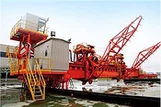
Check out our Circular Stacker. It's a great option for facilities that need to stack and reclaim materials in a circular pattern. It can handle a large volume of recyclables and is designed for efficient operation.
Another product in our lineup is the Cantilever Chain Reclaimer. This one is perfect for reclaiming materials from stockpiles. Its cantilever design provides a large reach, allowing for maximum recovery of recyclable materials.
And don't forget about our Stationary Stacking Conveyors. These conveyors are built to stack materials in an organized way, making it easier to manage and separate different types of recyclables later on.
Advantages of Using Our Stationary Conveyors for Separation
- Efficiency: Our conveyors are designed to work at high speeds, which means more materials can be processed in less time. This leads to higher productivity in your recycling facility.
- Customization: We understand that every recycling operation is unique. That's why we offer customization options for our stationary conveyors. Whether you need a specific length, width, or slope, we can build a conveyor system that meets your exact requirements.
- Durability: Our products are made from high - quality materials that are built to last. This reduces the need for frequent repairs and replacements, saving you both time and money in the long run.
- Safety: Safety is always a top priority. Our conveyors are equipped with safety features such as guards, emergency stop buttons, and sensors to ensure a safe working environment for your employees.
Conclusion and Call to Action
So, there you have it. Stationary conveyors can definitely play a crucial role in separating different types of recyclable materials. With the right technologies and a well - designed conveyor system, you can improve the efficiency of your recycling operation and make a positive impact on the environment.
If you're interested in learning more about our stationary conveyor products or want to discuss how we can help you with your recycling separation needs, don't hesitate to reach out. We're here to answer all your questions and help you find the best solution for your business. Let's work together to make recycling more effective and sustainable!


References
- Recycling Technology Handbook, 2022 Edition
- Conveyor Systems: Design, Operation, and Maintenance, by John Smith
- Sustainable Recycling Practices, Journal of Environmental Science, 2023