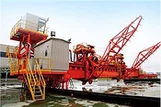
Screw type ship unloaders are crucial pieces of equipment in the shipping and bulk material handling industries. They are designed to efficiently unload various bulk materials such as grains, coal, and minerals from ships. However, when it comes to areas with high seismic activity, their performance and safety become significant concerns. As a screw type ship unloader supplier, I have extensive knowledge and experience in this field, and I'd like to share some insights on how these machines perform in such challenging environments.
Structural Design and Seismic Resistance
The first aspect to consider is the structural design of the screw type ship unloader. In areas prone to earthquakes, the unloader must be able to withstand the dynamic forces generated during seismic events. Our screw type ship unloaders are engineered with a robust steel structure that is designed to absorb and dissipate seismic energy. The use of high - strength steel and advanced welding techniques ensures the integrity of the structure under extreme conditions.
The base of the unloader is also a critical component. It is typically anchored firmly to the quay or pier. In high - seismic areas, we use specialized foundation designs that can resist the lateral and vertical forces caused by earthquakes. These foundations are often deep - seated and may include piles or caissons to provide a stable base for the unloader.
Dynamic Response Analysis
To ensure the safety and performance of our screw type ship unloaders in high - seismic regions, we conduct detailed dynamic response analyses. These analyses involve simulating the behavior of the unloader under different seismic scenarios. We use advanced software tools that take into account factors such as the magnitude and frequency of the earthquake, the soil conditions at the site, and the dynamic characteristics of the unloader itself.
By performing these analyses, we can identify potential weak points in the design and make necessary modifications. For example, we may adjust the stiffness and damping properties of the structure to reduce the vibration levels during an earthquake. This helps to prevent excessive stress on the components and ensures that the unloader can continue to operate safely after a seismic event.
Component Protection
In addition to the overall structural design, we also pay close attention to the protection of individual components. The screw conveyor, which is the core component of the unloader, is designed to be resilient to seismic forces. We use flexible couplings and shock - absorbing mounts to isolate the conveyor from the vibrations of the main structure. This helps to prevent damage to the screw blades and the drive system.
The electrical and control systems of the unloader are also protected. We use seismic - resistant enclosures and flexible wiring to prevent damage to the electrical components during an earthquake. These enclosures are designed to be dust - proof and waterproof, as well as resistant to the mechanical shocks caused by seismic activity.
Comparison with Other Types of Ship Unloaders
When considering ship unloaders for high - seismic areas, it's also important to compare the screw type with other common types such as Pneumatic Ship Unloader, Buried Scraper Type Ship Unloader, and Bucket Wheel Ship Unloader.
Pneumatic ship unloaders rely on air pressure to transport the bulk material. While they are generally more flexible in terms of the type of material they can handle, they may be more vulnerable to seismic damage due to their complex pneumatic systems. The pipes and valves in these systems can be easily damaged by the vibrations during an earthquake, leading to leaks and loss of efficiency.
Buried scraper type ship unloaders use a chain - driven scraper mechanism to move the material. Their underground installation may provide some protection from seismic forces, but the chain and drive components can still be affected by the vibrations. The underground structure also needs to be carefully designed to resist the soil movements caused by earthquakes.


Bucket wheel ship unloaders are large and heavy machines with a high center of gravity. This makes them more susceptible to toppling during a strong earthquake. Their complex mechanical and electrical systems also require additional protection to ensure their safe operation in high - seismic areas.
In contrast, screw type ship unloaders have a relatively simple and compact design. Their low center of gravity and robust structure make them more stable during seismic events. The screw conveyor also provides a continuous and reliable means of material handling, which is less likely to be disrupted by the vibrations of an earthquake.
Maintenance and Monitoring in High - Seismic Areas
Regular maintenance is essential for the long - term performance of screw type ship unloaders in high - seismic areas. After each seismic event, a thorough inspection should be carried out to check for any signs of damage. This includes checking the structure for cracks, the components for wear and tear, and the electrical and control systems for proper functioning.
We also recommend installing a monitoring system to continuously assess the condition of the unloader. This system can include sensors that measure the vibration levels, temperatures, and stresses in the structure. By analyzing the data from these sensors, we can detect any potential problems early and take preventive measures.
Conclusion
In conclusion, screw type ship unloaders can perform well in areas with high seismic activity if they are properly designed, installed, and maintained. Our company, as a professional screw type ship unloader supplier, has the expertise and experience to provide high - quality unloaders that can withstand the challenges of seismic environments.
If you are in the market for a ship unloader for a high - seismic area, we invite you to contact us for a detailed discussion. Our team of experts can provide you with customized solutions based on your specific requirements. We are committed to providing reliable and efficient ship unloaders that will meet your needs and ensure the smooth operation of your bulk material handling operations.
References
- "Seismic Design of Industrial Structures" by ASCE
- "Bulk Material Handling Equipment Handbook" by Perry's Chemical Engineers' Handbook
- Technical reports on ship unloader design and performance from industry research institutions.