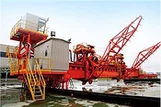
Hey there! As a supplier of Bucket Wheel Stackers, I often get asked about how much space these machines need for installation. It's a crucial question, especially for those planning to set up a new storage yard or upgrade their existing material handling systems. In this blog, I'll break down the factors that determine the space requirements for a Bucket Wheel Stacker and give you a better idea of what to expect.
Understanding the Basics of Bucket Wheel Stackers
Before we dive into the space requirements, let's quickly go over what a Bucket Wheel Stacker is. These machines are used in bulk material handling operations, like coal, ore, and grain storage yards. They work by stacking materials in large piles and can also be used for reclaiming the materials when needed. There are different types of Bucket Wheel Stackers, such as the Cantilever Bucket Wheel Stacker, Gantry Bucket Wheel Stacker Reclaimer, and Bucket Wheel Stacker Reclaimer. Each type has its own unique design and operational characteristics, which can affect the space it needs.
Factors Affecting Space Requirements
Machine Size and Dimensions
The physical size of the Bucket Wheel Stacker is one of the most obvious factors influencing the installation space. Larger machines with longer booms and higher stacking capacities will naturally require more room. For example, a large-capacity Bucket Wheel Stacker with a boom length of 50 meters or more will need a significant amount of space both in length and width to operate safely. You need to consider not only the length of the boom when it's fully extended but also the clearance needed for its rotation and movement.
Stacking Pattern and Pile Dimensions
The way you plan to stack the materials also plays a big role. Different stacking patterns, such as chevron, windrow, or cone shell, require different amounts of space. Chevron stacking, where the material is deposited in a series of overlapping layers, may need a wider area compared to windrow stacking, which creates long, narrow piles. Additionally, the height and width of the material piles need to be factored in. Higher and wider piles mean more space is needed around the stacker to accommodate the growth of the piles over time.
Operational Clearance
Safety is always a top priority, so you need to leave enough clearance around the Bucket Wheel Stacker for safe operation. This includes clearance for maintenance access, operator movement, and to prevent collisions with other equipment or structures. A general rule of thumb is to leave at least a few meters of clearance on all sides of the machine. You also need to consider the space needed for the conveyor systems that feed the stacker and transport the reclaimed materials.
Site Conditions
The layout and topography of the installation site can significantly impact the space requirements. If the site is uneven or has obstacles, you may need to make adjustments to the stacker's position or the stacking pattern. For example, if there are nearby buildings or other structures, you'll need to ensure that the stacker can operate without interfering with them. Also, the availability of space for maneuvering the stacker during installation and commissioning is important.


Calculating the Space Requirements
To get a more accurate estimate of the space needed for a Bucket Wheel Stacker, you can follow these steps:
- Determine the Machine Dimensions: Obtain the detailed specifications of the Bucket Wheel Stacker you're considering, including the length, width, and height of the machine, as well as the maximum reach of the boom.
- Plan the Stacking Pattern: Decide on the stacking pattern based on your material handling requirements and the available space. Calculate the dimensions of the material piles according to the chosen pattern.
- Add Operational Clearance: Add the required clearance around the machine and the material piles for safe operation and maintenance.
- Consider Site-Specific Factors: Take into account any site-specific conditions, such as slopes, obstacles, or existing infrastructure, and make adjustments to the space calculations accordingly.
Let's say you're planning to install a medium-sized Bucket Wheel Stacker with a boom length of 30 meters. You've decided to use a windrow stacking pattern with a pile height of 10 meters and a width of 20 meters. You'll need to leave at least 5 meters of clearance around the machine and the piles for safety and maintenance. Based on these parameters, you can calculate the approximate length and width of the area needed for the installation.
Case Studies
To give you a better idea of how these factors play out in real-world scenarios, let's look at a couple of case studies.
Case Study 1: Coal Storage Yard
A coal storage yard wanted to install a Bucket Wheel Stacker Reclaimer to improve its material handling efficiency. The site had a relatively flat surface but was limited in width due to nearby railway tracks. After careful planning, they chose a stacker with a 40-meter boom length and a chevron stacking pattern. They calculated that they needed an area of approximately 100 meters in length and 50 meters in width, including the necessary clearance. By optimizing the stacking pattern and leaving just enough clearance for safe operation, they were able to fit the stacker into the available space.
Case Study 2: Ore Handling Facility
An ore handling facility was expanding its operations and needed to install a new Gantry Bucket Wheel Stacker Reclaimer. The site had an uneven terrain with some slopes. They decided to use a cone shell stacking pattern to make the most of the available space. They also had to consider the space needed for the conveyor systems that connected the stacker to the processing plant. After accounting for all these factors, they determined that they needed an area of about 150 meters in length and 60 meters in width for the installation.
Conclusion
As you can see, the space requirements for a Bucket Wheel Stacker depend on a variety of factors, including the machine size, stacking pattern, operational clearance, and site conditions. By carefully considering these factors and doing the necessary calculations, you can ensure that you have enough space for a successful installation.
If you're in the market for a Bucket Wheel Stacker and need help determining the space requirements for your specific application, don't hesitate to reach out. We're here to assist you with all your material handling needs and can provide you with detailed information and guidance on choosing the right stacker for your site. Let's start a conversation and see how we can help you optimize your material handling operations.
References
- "Bulk Material Handling Handbook"
- Industry standards and guidelines for Bucket Wheel Stacker installation