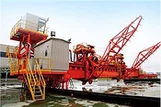
As a supplier of Discontinuous Ship Unloaders, ensuring the proper alignment of our equipment with the ship is of utmost importance. This process not only affects the efficiency of the unloading operation but also has a significant impact on the safety and integrity of both the ship and the unloader. In this blog post, I will share some key strategies and techniques that we use to guarantee the proper alignment of our discontinuous ship unloaders with the ship.
Understanding the Basics of Alignment
Before delving into the specific methods of alignment, it is essential to understand the basic principles involved. The alignment of a discontinuous ship unloader with the ship refers to the precise positioning of the unloader relative to the ship's cargo holds. This positioning ensures that the grab bucket or other unloading mechanisms can reach the cargo effectively and safely.
There are two main aspects to consider when aligning a discontinuous ship unloader: horizontal alignment and vertical alignment. Horizontal alignment involves positioning the unloader along the length and width of the ship, while vertical alignment focuses on the height of the unloader relative to the ship's deck.
Horizontal Alignment
Ship Positioning and Mooring
The first step in achieving proper horizontal alignment is to ensure that the ship is properly positioned and moored at the unloading berth. The ship should be aligned parallel to the quay wall, and the distance between the ship and the unloader should be within the specified range. This can be achieved through the use of mooring lines and fenders to secure the ship in place.
Laser and GPS Technology
To accurately position the unloader horizontally, we often use laser and GPS technology. Laser sensors can be installed on the unloader and the ship to measure the distance and alignment between the two. GPS systems can also provide real - time location data, allowing for precise positioning of the unloader along the length and width of the ship.
For example, our Grab Bucket Gantry Crane is equipped with advanced laser and GPS systems that enable it to align with the ship's cargo holds with high precision. These technologies continuously monitor the position of the unloader and make automatic adjustments as needed to maintain proper alignment.
Manual Adjustment and Visual Inspection
In addition to using technology, manual adjustment and visual inspection are also crucial steps in horizontal alignment. Operators can use the control system of the unloader to make small adjustments to the position of the unloader based on visual cues. They can visually check the alignment of the grab bucket with the cargo holds and make any necessary corrections.
Vertical Alignment
Height Measurement
Vertical alignment is mainly concerned with ensuring that the grab bucket or other unloading mechanisms can reach the cargo in the ship's holds. To achieve this, we use height measurement devices such as ultrasonic sensors or laser rangefinders. These devices can accurately measure the distance between the unloader and the ship's deck, allowing for precise adjustment of the unloader's height.
Load - Sensing Technology
Load - sensing technology is also used to optimize vertical alignment. By monitoring the load on the grab bucket during the unloading process, the unloader can adjust its height to ensure that the grab bucket is at the optimal position for picking up the cargo. This not only improves the efficiency of the unloading operation but also reduces the risk of damage to the unloader and the ship.
Our Grab Type Ship Unloader is designed with advanced load - sensing technology that enables it to adapt to different cargo levels in the ship's holds, ensuring proper vertical alignment throughout the unloading process.
Continuous Monitoring and Feedback
Once the initial alignment is achieved, continuous monitoring and feedback are essential to maintain proper alignment during the unloading operation. The unloader's control system should continuously monitor the position and alignment of the unloader relative to the ship. Any deviations from the desired alignment should be detected and corrected immediately.


Real - time data from the sensors can be displayed on the operator's control panel, allowing the operator to make informed decisions about any necessary adjustments. In addition, automated control systems can be programmed to make small adjustments automatically, reducing the need for constant manual intervention.
Training and Operator Competence
Another critical factor in ensuring proper alignment is the training and competence of the operators. Our company provides comprehensive training programs for operators to ensure that they have a thorough understanding of the alignment process and the operation of the discontinuous ship unloaders.
Operators are trained to use the various alignment technologies and control systems effectively. They are also taught how to perform visual inspections and make manual adjustments when necessary. By having well - trained operators, we can minimize the risk of alignment errors and ensure the smooth and efficient operation of the unloading process.
Maintenance and Calibration
Regular maintenance and calibration of the alignment systems are essential to ensure their accuracy and reliability. The laser sensors, GPS systems, and other alignment devices should be inspected and calibrated on a regular basis to ensure that they are functioning properly.
Any worn or damaged components should be replaced promptly to prevent alignment errors. Our company offers a comprehensive maintenance service for our discontinuous ship unloaders, including regular calibration of the alignment systems to ensure optimal performance.
Case Studies
Let's take a look at a real - world example of how our alignment techniques have been successfully applied. At a major port, we installed a Query - side Container Crane for a shipping company. The crane was used to unload containers from large container ships.
By using a combination of laser and GPS technology, along with manual adjustment and continuous monitoring, we were able to achieve precise alignment of the crane with the ship's container bays. This resulted in a significant increase in the unloading efficiency, reducing the time required to unload each ship by up to 30%.
Conclusion
Ensuring the proper alignment of a discontinuous ship unloader with the ship is a complex but crucial process. By using a combination of advanced technologies, manual adjustment, continuous monitoring, and well - trained operators, we can achieve high - precision alignment and improve the efficiency and safety of the unloading operation.
If you are interested in our Discontinuous Ship Unloaders and would like to discuss your specific requirements, we invite you to contact us for a procurement consultation. Our team of experts is ready to provide you with detailed information and customized solutions to meet your needs.
References
- International Maritime Organization (IMO). Guidelines for Safe Ship - Shore Interface Operations.
- American Society of Mechanical Engineers (ASME). Standards for Ship Unloading Equipment.