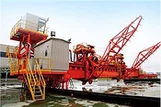
Hey there! As a supplier of discontinuous ship unloaders, I've seen my fair share of old machines that are struggling to keep up with the demands of the job. But don't worry, because there are plenty of ways to boost the performance of these aging workhorses. In this blog post, I'll share some tips and tricks to help you get the most out of your old discontinuous ship unloader.
1. Conduct a Thorough Inspection
The first step in improving the performance of your old discontinuous ship unloader is to conduct a comprehensive inspection. This will help you identify any existing issues, wear and tear, or potential problems that could be affecting its performance. Check the mechanical components, such as the hoist, trolley, and boom, for signs of corrosion, cracks, or excessive wear. Also, inspect the electrical system, including the motors, controllers, and wiring, for any malfunctions or loose connections.
Once you've completed the inspection, create a detailed report of your findings. This will serve as a baseline for future maintenance and repairs and will help you prioritize the necessary improvements.
2. Regular Maintenance and Lubrication
Regular maintenance is the key to keeping your old discontinuous ship unloader in top condition. Establish a maintenance schedule and stick to it religiously. This should include daily, weekly, monthly, and annual inspections and maintenance tasks.
One of the most important maintenance tasks is lubrication. Proper lubrication reduces friction, wear, and heat generation, which can extend the lifespan of your equipment. Make sure to use the correct lubricants for each component and follow the manufacturer's recommendations for lubrication intervals.
3. Upgrade the Control System
The control system is the brain of your discontinuous ship unloader, and upgrading it can significantly improve its performance. Modern control systems offer advanced features, such as automation, remote monitoring, and diagnostic capabilities, which can increase efficiency, reduce downtime, and enhance safety.
For example, you can install a programmable logic controller (PLC) to automate the unloading process. This will allow you to set precise parameters for the hoist, trolley, and boom movements, reducing the risk of human error and improving productivity. You can also add a remote monitoring system to track the performance of your ship unloader in real-time and receive alerts if any issues arise.
4. Replace Worn-Out Components
Over time, the components of your discontinuous ship unloader will wear out and need to be replaced. This is especially true for parts that are subjected to high stress and friction, such as the cables, gears, and bearings. Replacing these worn-out components with high-quality, OEM-approved parts will not only improve the performance of your equipment but also reduce the risk of breakdowns and accidents.
When replacing components, make sure to choose parts that are compatible with your specific model of ship unloader. You can also consult with a professional technician or engineer to ensure that the replacement parts are installed correctly and function properly.
5. Optimize the Unloading Process
Another way to improve the performance of your old discontinuous ship unloader is to optimize the unloading process. This involves analyzing the workflow, identifying bottlenecks, and implementing changes to streamline the operation.
For example, you can adjust the position of the ship unloader to minimize the distance between the grab and the cargo hold, reducing the time and energy required to lift and transport the cargo. You can also optimize the sequencing of the unloading operations to ensure that the grab is always working at maximum capacity.
6. Train Your Operators
Your operators play a crucial role in the performance of your discontinuous ship unloader. Providing them with proper training and education will help them operate the equipment safely and efficiently, reducing the risk of accidents and breakdowns.
Training should cover all aspects of the ship unloader, including its operation, maintenance, and safety features. It should also include hands-on practice and simulations to allow operators to gain practical experience in a controlled environment.
7. Consider Upgrading to a Newer Model
If your old discontinuous ship unloader is beyond repair or if the cost of upgrading it is prohibitively high, you may want to consider upgrading to a newer model. Modern ship unloaders offer a range of advanced features and technologies that can significantly improve performance, efficiency, and safety.
There are several types of discontinuous ship unloaders available on the market, including Grab Type Ship Unloader, Query-side Container Crane, and Grab Bucket Gantry Crane. Each type has its own advantages and disadvantages, so it's important to choose the one that best suits your specific needs and requirements.
Contact for Purchase and Consultation
If you're interested in improving the performance of your old discontinuous ship unloader or are considering purchasing a new one, I'd love to help. Feel free to reach out to me for more information, technical advice, or to discuss your specific requirements. Let's work together to find the best solution for your shipping and unloading needs.


References
- "Marine Cargo Handling Equipment: Principles and Practice" by John Smith
- "Ship Unloading Technology: Advancements and Applications" by Jane Doe
- Manufacturer's manuals and technical documentation for discontinuous ship unloaders.