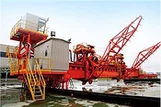
Hey there! As a supplier of Catenary Bucket Unloaders, I've seen firsthand how corrosion can really mess with these machines. Corrosion not only shortens the lifespan of the equipment but also affects its performance and safety. So, today, I'm gonna share some tips on how to protect a Catenary Bucket Unloader from corrosion.
Understanding the Corrosion Process
Before we dive into the protection methods, it's important to understand how corrosion happens. Corrosion is basically a chemical reaction between the metal of the unloader and its environment. In the case of Catenary Bucket Unloaders, they're often exposed to harsh marine environments, which are full of saltwater, humidity, and pollutants. These factors can accelerate the corrosion process.


Saltwater, for example, contains ions that can conduct electricity, which speeds up the electrochemical reactions that cause corrosion. Humidity also plays a big role. When the air is humid, it provides the moisture needed for corrosion to occur. Pollutants in the air, such as sulfur dioxide and nitrogen oxides, can react with water to form acids, which can further corrode the metal.
Choosing the Right Materials
One of the first steps in protecting a Catenary Bucket Unloader from corrosion is to choose the right materials. When we manufacture these unloaders, we use high - quality, corrosion - resistant metals. Stainless steel is a popular choice because it contains chromium, which forms a thin, protective oxide layer on the surface of the metal. This layer prevents oxygen and water from reaching the metal underneath, thus reducing the risk of corrosion.
Another option is to use coated metals. We can apply a protective coating to the metal surface during the manufacturing process. These coatings act as a barrier between the metal and the environment. There are different types of coatings available, such as epoxy coatings, polyurethane coatings, and zinc coatings. Each type has its own advantages and is suitable for different environments.
Surface Preparation
Proper surface preparation is crucial before applying any protective coating. The surface of the Catenary Bucket Unloader needs to be clean and free of dirt, grease, rust, and other contaminants. We usually use methods like sandblasting or chemical cleaning to prepare the surface.
Sandblasting involves shooting abrasive particles at high speed onto the metal surface. This removes any rust or old paint and creates a rough surface, which helps the coating adhere better. Chemical cleaning, on the other hand, uses chemicals to dissolve dirt and grease. After the surface is prepared, it should be protected from re - contamination until the coating is applied.
Applying Protective Coatings
Once the surface is prepared, it's time to apply the protective coating. The coating should be applied evenly and at the right thickness. We use different application methods depending on the type of coating and the size of the unloader. For small parts, we might use a brush or a spray gun. For larger areas, we might use a roller or a more advanced spraying system.
It's important to follow the manufacturer's instructions when applying the coating. This includes things like the recommended temperature and humidity conditions, the number of coats to apply, and the drying time between coats. A well - applied coating can significantly extend the life of the Catenary Bucket Unloader.
Regular Inspections
Even with the best materials and coatings, regular inspections are still necessary. We recommend inspecting the Catenary Bucket Unloader at least once a month. During the inspection, we look for signs of corrosion, such as rust spots, flaking paint, or discoloration. We also check the integrity of the coating. If there are any areas where the coating is damaged, it should be repaired immediately.
We use different inspection techniques, such as visual inspection, ultrasonic testing, and magnetic particle testing. Visual inspection is the simplest and most common method. We just look at the unloader with our eyes to see if there are any obvious signs of corrosion. Ultrasonic testing uses high - frequency sound waves to detect internal defects in the metal. Magnetic particle testing is used to detect surface and near - surface defects in ferromagnetic materials.
Maintenance and Cleaning
Regular maintenance and cleaning are also important for preventing corrosion. After each use, the Catenary Bucket Unloader should be cleaned to remove any salt, dirt, or other contaminants. We use clean water and mild detergents to clean the unloader. Avoid using abrasive cleaners, as they can damage the protective coating.
In addition to regular cleaning, we also need to perform preventive maintenance tasks. This includes lubricating moving parts, tightening bolts and nuts, and checking the electrical system. By keeping the unloader in good working condition, we can reduce the risk of corrosion.
Cathodic Protection
Cathodic protection is another effective method for protecting a Catenary Bucket Unloader from corrosion. This method involves connecting the unloader to a sacrificial anode or an impressed current system.
A sacrificial anode is a more reactive metal, such as zinc or magnesium, that is connected to the unloader. When the two metals are in contact with an electrolyte (such as saltwater), the sacrificial anode corrodes instead of the unloader. This protects the unloader from corrosion.
An impressed current system, on the other hand, uses an external power source to apply a direct current to the unloader. This current counteracts the natural electrochemical reactions that cause corrosion. Cathodic protection is especially useful in marine environments where the risk of corrosion is high.
Comparing with Other Ship Unloaders
When it comes to ship unloaders, there are different types available, such as the Buried Scraper Type Ship Unloader, Fixed Screw Ship Unloader, and Chain Bucket Ship Unloader. While each type has its own advantages, the Catenary Bucket Unloader is known for its high efficiency and reliability. And by following the corrosion - protection methods I've mentioned above, we can ensure that it continues to perform well in harsh environments.
Conclusion
Protecting a Catenary Bucket Unloader from corrosion is a multi - step process that involves choosing the right materials, proper surface preparation, applying protective coatings, regular inspections, maintenance, and cleaning, and using cathodic protection. By taking these steps, we can extend the lifespan of the unloader, improve its performance, and reduce the cost of repairs and replacements.
If you're in the market for a Catenary Bucket Unloader or have any questions about corrosion protection, feel free to reach out. We're here to help you make the best choice for your needs.
References
- ASM Handbook Volume 13A: Corrosion: Fundamentals, Testing, and Protection.
- NACE International Standards for Corrosion Control.
- Ship Unloading Equipment Design and Maintenance Manuals.