Hey there! As a supplier of stationary conveyors, I've seen firsthand how these machines have revolutionized the chemical industry. In this blog, I'm gonna share some of the key applications of stationary conveyors in this field and explain why they're so important.
1. Raw Material Handling
One of the primary applications of stationary conveyors in the chemical industry is handling raw materials. Chemical plants deal with a wide variety of raw materials, such as powders, granules, and liquids. Stationary conveyors can efficiently transport these materials from storage areas to processing units.
For example, if you're dealing with powdered chemicals, a belt conveyor can be used to move the powder from a silo to a mixer. The conveyor can be designed with a special type of belt that prevents the powder from leaking or spilling during transportation. This not only ensures the safety of the workers but also reduces the waste of valuable raw materials.
Another type of conveyor that's commonly used for raw material handling is the screw conveyor. Screw conveyors are great for moving granular materials, like plastic pellets or salt. They work by rotating a helical screw inside a tube, which pushes the material forward. Screw conveyors are relatively compact and can be installed in tight spaces, making them ideal for chemical plants where space is often limited.
2. Product Transfer
Once the raw materials have been processed into finished products, stationary conveyors are used to transfer these products to storage or packaging areas. In the chemical industry, products can be in various forms, such as solid blocks, liquid containers, or powder bags.
For solid products, roller conveyors are often used. Roller conveyors consist of a series of rollers that are mounted on a frame. The products can be easily moved along the rollers by gravity or by using a motorized drive. Roller conveyors are suitable for handling heavy and large products, and they can be customized to fit the specific requirements of the chemical plant.
If you're dealing with liquid products, pipeline conveyors are a popular choice. Pipeline conveyors use pumps to move the liquid through a network of pipes. They can be used to transfer liquids over long distances and can handle a wide range of flow rates. Pipeline conveyors are also very efficient and can minimize the risk of spills or leaks.
3. Waste Management
The chemical industry generates a significant amount of waste, including hazardous waste. Stationary conveyors play an important role in waste management by transporting the waste from the production areas to the waste treatment facilities.
For example, a chain conveyor can be used to move solid waste, such as chemical sludge or waste containers, to a waste disposal site. Chain conveyors are strong and durable, and they can handle heavy loads. They can also be designed to operate in harsh environments, such as high-temperature or corrosive conditions.
In addition to solid waste, stationary conveyors can also be used to handle liquid waste. For instance, a belt conveyor with a special lining can be used to transport liquid waste to a treatment tank. The lining can prevent the liquid from leaking and protect the conveyor from corrosion.
4. Automation and Integration
In modern chemical plants, automation is becoming increasingly important. Stationary conveyors can be integrated into automated systems to improve the efficiency and productivity of the production process.
For example, a conveyor system can be connected to a robotic arm or a sorting machine. The robotic arm can pick up products from the conveyor and place them in the appropriate packaging or storage containers. The sorting machine can separate different types of products based on their size, shape, or weight. By integrating conveyors with these automated devices, chemical plants can reduce labor costs and increase the accuracy of the production process.
Moreover, stationary conveyors can be controlled by a central computer system. The computer system can monitor the operation of the conveyors, adjust the speed and direction of the conveyors, and detect any faults or malfunctions. This allows for real-time monitoring and control of the conveyor system, which can improve the overall efficiency and reliability of the chemical plant.
5. Specific Types of Stationary Conveyors in the Chemical Industry
There are several specific types of stationary conveyors that are commonly used in the chemical industry. Let's take a look at some of them:
Stationary Stacking Conveyors
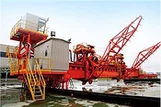
Stationary Stacking Conveyors are used to stack bulk materials, such as coal, ore, or chemical powders, in a storage yard. These conveyors can be designed to stack the materials in a specific pattern, such as a cone or a pyramid. Stationary stacking conveyors are very efficient and can handle large volumes of materials.
Circular Stacker
Circular Stacker is a type of stationary conveyor that is used to stack materials in a circular pattern. It consists of a rotating boom that can move the materials around a central point. Circular stackers are often used in large storage yards where space is limited. They can stack materials in a very compact manner, which maximizes the storage capacity of the yard.


Circular Overpile Stacker Reclaimer
Circular Overpile Stacker Reclaimer is a combination of a circular stacker and a reclaimer. It can stack materials in a circular pattern and then reclaim the materials when needed. This type of conveyor is very useful in chemical plants where materials need to be stored and retrieved in a controlled manner.
Why Choose Our Stationary Conveyors?
As a supplier of stationary conveyors, we offer a wide range of products that are designed to meet the specific needs of the chemical industry. Our conveyors are made from high-quality materials and are built to last. They are also designed to be easy to install, operate, and maintain.
In addition, we provide excellent customer service. Our team of experts can help you choose the right conveyor for your application, and we can also provide installation and maintenance services. We understand that the chemical industry is a high-risk industry, so we take all the necessary precautions to ensure the safety and reliability of our products.
If you're in the chemical industry and you're looking for a reliable supplier of stationary conveyors, look no further. Contact us today to discuss your requirements and let us help you find the perfect conveyor solution for your plant.
References
- Chemical Engineering Handbook
- Conveyor Technology: Principles, Design, and Applications
So, that's all about the applications of stationary conveyors in the chemical industry. I hope this blog has been informative and helpful. If you have any questions or comments, feel free to leave them below. And remember, if you're in the market for stationary conveyors, give us a shout!