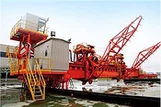
Hey there! As a supplier of Continuous Ship Unloaders, I'm super excited to chat with you about the control systems used in these amazing machines. Continuous Ship Unloaders are like the unsung heroes of the shipping and logistics world. They're constantly at work, efficiently unloading all sorts of bulk materials from ships, making the whole process smooth and fast.
Let's start by understanding what a Continuous Ship Unloader is. It's a specialized piece of equipment designed to continuously unload bulk materials such as grains, coal, ores, and fertilizers from ships. There are different types of Continuous Ship Unloaders, including the Buried Scraper Type Ship Unloader, Pneumatic Ship Unloader, and Fixed Screw Ship Unloader. Each type has its own unique features and is suited for different kinds of materials and unloading requirements.
Now, let's dive into the control systems. These systems are the brains behind the operation of Continuous Ship Unloaders. They ensure that the unloader works safely, efficiently, and precisely.
Programmable Logic Controllers (PLCs)
One of the most common control systems used in Continuous Ship Unloaders is the Programmable Logic Controller, or PLC for short. PLCs are like little computers that can be programmed to control different functions of the unloader. They're really versatile and can handle a wide range of tasks, from simple on - off control to complex sequencing operations.
For example, a PLC can be programmed to control the movement of the unloader's boom. It can make the boom extend, retract, and rotate to the right position over the ship's cargo hold. The PLC can also control the speed of the conveyor belts that transport the unloaded materials from the ship to the storage area. By adjusting the belt speed, the PLC can ensure that the material flow is consistent and that the unloader operates at an optimal rate.
PLCs are also great for safety. They can monitor various sensors on the unloader, such as limit switches and pressure sensors. If a limit switch is triggered, indicating that the boom has reached its maximum extension, the PLC can immediately stop the movement to prevent any damage. Similarly, if a pressure sensor detects an abnormal pressure in the hydraulic system, the PLC can shut down the relevant components to avoid a potential failure.
Human - Machine Interface (HMI)
Another important part of the control system is the Human - Machine Interface, or HMI. The HMI is the interface between the operator and the unloader. It's usually a touchscreen panel or a set of control buttons and displays.
The HMI allows the operator to monitor the status of the unloader in real - time. They can see things like the position of the boom, the speed of the conveyor belts, and the temperature of different components. The operator can also use the HMI to input commands and set parameters. For example, they can set the desired unloading rate or the position of the boom.
The HMI is designed to be user - friendly, so even operators with limited technical knowledge can easily operate the unloader. It provides visual feedback, such as alarms and warnings, to alert the operator of any issues. If there's a problem with the unloader, the HMI will display an error message and may even provide some troubleshooting suggestions.
Sensors and Feedback Systems
Sensors play a crucial role in the control systems of Continuous Ship Unloaders. There are different types of sensors used, each with its own specific function.
Position sensors are used to determine the position of the unloader's moving parts, such as the boom and the bucket wheel. These sensors can provide accurate information about the location of the parts, allowing the control system to precisely control their movement.
Load sensors are used to measure the amount of material being unloaded. They can help the control system adjust the unloading rate to match the capacity of the storage area and the downstream processing equipment. For example, if the load sensor detects that the storage area is almost full, the control system can slow down the unloading rate.
Speed sensors are used to monitor the speed of the conveyor belts and other rotating components. By continuously monitoring the speed, the control system can ensure that the components are operating within the safe and efficient range. If the speed is too high or too low, the control system can make the necessary adjustments.
Advanced Control Algorithms
In addition to the basic control systems, many modern Continuous Ship Unloaders also use advanced control algorithms. These algorithms are designed to optimize the performance of the unloader and to adapt to different operating conditions.
For example, some unloaders use fuzzy logic control algorithms. Fuzzy logic is a form of artificial intelligence that can handle uncertain and imprecise information. It can take into account multiple factors, such as the type of material, the weather conditions, and the ship's characteristics, to make intelligent decisions about the operation of the unloader.
Another advanced algorithm is the adaptive control algorithm. This algorithm can automatically adjust the control parameters based on the changing operating conditions. For example, if the unloader is unloading a different type of material with different physical properties, the adaptive control algorithm can adjust the speed of the conveyor belts and the force applied by the bucket wheel to ensure efficient unloading.
Communication Systems
Communication systems are also an important part of the control systems in Continuous Ship Unloaders. These systems allow different components of the unloader to communicate with each other and with the central control system.
Ethernet is a commonly used communication protocol in modern unloaders. It provides a high - speed and reliable communication link between the PLCs, the HMI, and other devices. With Ethernet, data can be transmitted quickly and accurately, enabling real - time control and monitoring.
Wireless communication systems are also being increasingly used. They offer more flexibility, especially for unloaders that need to move around the port area. Wireless communication can allow the operator to control the unloader from a remote location, providing greater convenience and safety.
Integration with Other Systems
Continuous Ship Unloaders are often part of a larger logistics system. They need to be integrated with other equipment, such as storage silos, conveyor systems, and loading equipment.
The control system of the unloader needs to be able to communicate and coordinate with the control systems of these other components. For example, the unloader's control system needs to know the capacity of the storage silo and the availability of the downstream conveyor system. Based on this information, it can adjust the unloading rate to ensure a smooth and continuous flow of materials through the entire system.
Benefits of Advanced Control Systems
Using advanced control systems in Continuous Ship Unloaders offers several benefits.
First of all, it improves safety. The sensors and control algorithms can detect potential problems early and take preventive measures to avoid accidents. This not only protects the equipment but also the operators and the surrounding environment.


Secondly, it increases efficiency. By precisely controlling the movement of the unloader and the flow of materials, the control systems can optimize the unloading process. This means that more materials can be unloaded in less time, reducing the overall operating cost.
Finally, it enhances reliability. The control systems can continuously monitor the performance of the unloader and detect any signs of wear or malfunction. By taking timely maintenance actions, the unloader can operate with high reliability, minimizing downtime.
If you're in the market for a Continuous Ship Unloader, you'll want to pay close attention to the control systems. A well - designed and advanced control system can make a big difference in the performance and cost - effectiveness of the unloader.
We're here to help you find the right Continuous Ship Unloader with the best - suited control system for your specific needs. Whether you're dealing with grains, coal, or other bulk materials, we have the expertise and the products to meet your requirements. If you're interested in learning more or starting a purchase negotiation, don't hesitate to reach out. We'd love to have a chat with you and see how we can work together to make your unloading operations more efficient and profitable.
References
- "Automation in Bulk Material Handling Equipment" - Industry research report
- "Control Systems for Heavy Machinery" - Technical handbook
- "Continuous Ship Unloading Technologies" - Journal of Maritime Engineering