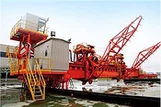
As a supplier of Bucket Wheel Ship Unloaders, I've been closely involved in the industry for quite some time. While these machines are incredibly useful and have many advantages, it's also important to be aware of their disadvantages. In this blog, I'll discuss some of the drawbacks of Bucket Wheel Ship Unloaders that you should consider.
High Initial Investment
One of the most significant disadvantages of a Bucket Wheel Ship Unloader is the high initial investment required. These machines are complex pieces of equipment that come with a hefty price tag. You're not just paying for the physical structure of the unloader but also for the advanced technology and engineering that goes into making it work efficiently. This large upfront cost can be a major barrier for smaller companies or those with limited budgets. For example, if a port is looking to expand its operations and add a new Bucket Wheel Ship Unloader, they'll need to allocate a substantial amount of capital. This money could otherwise be used for other aspects of the business, such as improving infrastructure or hiring more staff.
Maintenance and Repair Costs
Bucket Wheel Ship Unloaders are subject to a lot of wear and tear due to their continuous operation. The buckets, the wheel, and other moving parts are constantly in contact with the cargo, which can cause them to deteriorate over time. As a result, regular maintenance is essential to keep the unloader in good working condition. This includes tasks like lubricating the moving parts, checking the alignment of the buckets, and replacing any worn-out components. These maintenance activities can be time-consuming and expensive. Moreover, if a major breakdown occurs, the repair costs can be astronomical. For instance, if the Boom Jib of the unloader gets damaged, it may require specialized equipment and skilled technicians to fix it, which can add up to a significant expense.
Limited Cargo Compatibility
Another drawback of Bucket Wheel Ship Unloaders is their limited cargo compatibility. These unloaders are designed primarily for handling bulk materials such as coal, iron ore, and grains. They may not be suitable for handling other types of cargo, such as liquids or breakbulk goods. For example, if a port receives a shipment of liquid chemicals, a Bucket Wheel Ship Unloader would be completely useless. In such cases, the port would need to invest in additional equipment, like a Screw Type Ship Unloader or a Catenary Bucket Unloader, to handle the different types of cargo. This not only increases the overall cost but also adds complexity to the port's operations.
Environmental Impact
Bucket Wheel Ship Unloaders can have a significant environmental impact. When unloading bulk materials, a large amount of dust is generated, which can cause air pollution. This dust can be harmful to the health of the workers at the port and the surrounding community. Additionally, the noise generated by the unloader can be a nuisance to nearby residents. To mitigate these environmental impacts, ports need to invest in dust suppression systems and noise reduction measures. These additional costs can further increase the overall operating expenses of the Bucket Wheel Ship Unloader.
Space Requirements
Bucket Wheel Ship Unloaders are large and bulky machines that require a significant amount of space. They need to be installed in a specific area at the port, which may limit the port's ability to expand or use the space for other purposes. For example, if a port wants to add more berths or storage facilities, the presence of a Bucket Wheel Ship Unloader may make it difficult to do so. Moreover, the unloader needs to be positioned in a way that allows it to access the cargo on the ship easily. This may require careful planning and coordination, which can be time-consuming and costly.


Dependence on Power Supply
Bucket Wheel Ship Unloaders are highly dependent on a stable power supply. They require a large amount of electricity to operate, and any disruption in the power supply can bring the unloading process to a halt. This can cause delays in the shipment of goods and result in financial losses for the port and the shipping companies. For example, if there is a power outage due to a storm or a technical fault, the unloader will stop working until the power is restored. To avoid such situations, ports need to have backup power sources, such as generators, which can add to the overall cost of operating the unloader.
Complexity of Operation
Operating a Bucket Wheel Ship Unloader requires a high level of skill and training. The operators need to be familiar with the machine's controls, safety procedures, and maintenance requirements. They also need to be able to handle different types of cargo and adjust the unloader's settings accordingly. This complexity of operation can make it difficult to find and retain qualified operators. Moreover, if an inexperienced operator makes a mistake, it can lead to accidents or damage to the unloader. For example, if the operator fails to adjust the speed of the unloader properly, it may cause the buckets to overload or the wheel to jam.
Despite these disadvantages, Bucket Wheel Ship Unloaders still have their place in the shipping industry. They are efficient and can handle large volumes of bulk materials quickly. If you're considering purchasing a Bucket Wheel Ship Unloader for your port or shipping operation, it's important to weigh the pros and cons carefully. If you have any questions or need more information about our Bucket Wheel Ship Unloaders, please don't hesitate to contact us for a procurement discussion. We'll be happy to help you make an informed decision.
References
- Industry reports on port equipment technology
- Case studies of ports using Bucket Wheel Ship Unloaders
- Technical manuals of Bucket Wheel Ship Unloaders