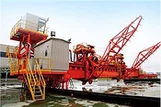
As a supplier of Discontinuous Ship Unloaders, I understand the critical importance of emergency stop procedures. These procedures are not only vital for the safety of the equipment but also for the well - being of the operators and the overall efficiency of the port operations. In this blog, I will delve into the emergency stop procedures for a discontinuous ship unloader and explain why they are so crucial.
Understanding Discontinuous Ship Unloaders
Discontinuous ship unloaders are designed to handle the unloading of various types of cargo from ships. They include different types such as the Grab Bucket Gantry Crane, Grab Type Ship Unloader, and Query - side Container Crane. These unloaders operate in a non - continuous manner, meaning that they pick up a certain amount of cargo at a time, transport it, and then deposit it at the designated location.
Importance of Emergency Stop Procedures
Emergency stop procedures are essential in any industrial setting, and ship unloading is no exception. A discontinuous ship unloader is a complex piece of machinery with multiple moving parts. Malfunctions can occur due to various reasons such as mechanical failures, electrical problems, or human errors. In such situations, an immediate stop of the equipment can prevent serious accidents, including collisions, spills, and damage to the unloader and the ship.
General Emergency Stop Procedures
1. Operator Training
Before any emergency can be effectively handled, operators must be well - trained. They should be familiar with the layout of the control panel, the location of the emergency stop buttons, and the sequence of actions to take in case of an emergency. Regular training sessions should be conducted to refresh their knowledge and skills.
2. Location of Emergency Stop Buttons
Emergency stop buttons should be clearly marked and easily accessible from all control stations and operating platforms of the discontinuous ship unloader. There should be multiple emergency stop buttons located strategically to ensure that an operator can stop the equipment from any position in case of an emergency.
3. Immediate Stop
When an emergency situation is detected, the operator should immediately press the emergency stop button. This will cut off the power supply to all moving parts of the unloader, including the hoisting mechanism, the trolley, and the gantry movement. The equipment will come to a halt as quickly as possible, and all functions will be disabled.
4. Communication
After pressing the emergency stop button, the operator should immediately communicate the situation to the relevant personnel, such as the port supervisor, maintenance team, and safety officers. They should provide detailed information about the nature of the emergency, including any visible signs of damage or malfunction.


5. Lock - out/Tag - out
Once the equipment has stopped, the maintenance team should follow the lock - out/tag - out procedures. This involves isolating the power source and attaching a tag to indicate that the equipment is under maintenance and should not be restarted without proper authorization.
Specific Emergency Stop Procedures for Different Types of Discontinuous Ship Unloaders
Grab Bucket Gantry Crane
- Mechanical Failures: If there is a mechanical failure in the hoisting mechanism of the grab bucket gantry crane, such as a broken wire rope or a jammed pulley, the operator should immediately stop the crane. The grab bucket should be lowered gently to the deck of the ship or the storage area to prevent it from falling unexpectedly.
- Electrical Failures: In case of an electrical failure, such as a short - circuit or a power outage, the emergency stop button should be pressed. The crane's braking system should be checked to ensure that the trolley and the gantry are securely held in place.
Grab Type Ship Unloader
- Spill Prevention: If there is a risk of cargo spillage, for example, if the grab is not closing properly or if there is a tear in the grab bucket, the unloader should be stopped immediately. The grab should be carefully inspected and repaired before resuming operation to prevent environmental pollution and damage to the port facilities.
- Collision Avoidance: In case of a potential collision with another ship or a structure in the port, the grab type ship unloader should be stopped. The operator should assess the situation and take appropriate measures to avoid the collision, such as adjusting the position of the unloader or waiting for the other vessel to pass.
Query - side Container Crane
- Container Handling Issues: If there is a problem with container handling, such as a container getting stuck or tipping over, the crane should be stopped immediately. The operator should then assess the situation and use the appropriate tools and techniques to safely handle the container.
- Wind - related Emergencies: High winds can pose a significant risk to a query - side container crane. If the wind speed exceeds the safe operating limit, the crane should be stopped, and the container should be secured. The crane should be parked in a safe position and tied down to prevent it from being blown over.
Post - Emergency Procedures
After the emergency has been resolved, a thorough inspection of the discontinuous ship unloader should be conducted. The maintenance team should check all mechanical, electrical, and hydraulic components for any signs of damage. Any damaged parts should be replaced, and the equipment should be tested to ensure that it is functioning properly before resuming normal operation.
Conclusion
Emergency stop procedures for a discontinuous ship unloader are a critical part of ensuring the safety and efficiency of ship unloading operations. By following the general and specific emergency stop procedures, operators can effectively handle emergencies and prevent serious accidents. As a supplier of discontinuous ship unloaders, we are committed to providing high - quality equipment and comprehensive training to our customers to ensure that they can operate our unloaders safely.
If you are in the market for a discontinuous ship unloader or have any questions about our products and emergency stop procedures, we encourage you to contact us for a detailed discussion. Our team of experts is ready to assist you in finding the best solution for your ship unloading needs.
References
- Ship Unloading Safety Manual, International Maritime Organization
- Handbook of Discontinuous Ship Unloading Equipment, Industry Standard Publications
- Safety Guidelines for Port Operations, National Port Authority