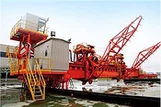
As a supplier of Bucket Wheel Ship Unloaders, I've witnessed firsthand the growing concerns about the environmental impacts of industrial equipment. In this blog, I'll delve into the various environmental aspects associated with Bucket Wheel Ship Unloaders, exploring both the challenges they pose and the ways we're working to mitigate their effects.
Air Quality Impact
One of the most significant environmental concerns related to Bucket Wheel Ship Unloaders is their impact on air quality. During the unloading process, these machines handle large quantities of bulk materials such as coal, iron ore, and grains. When these materials are moved, dust is generated, which can be released into the atmosphere.
Dust emissions from Bucket Wheel Ship Unloaders can contain particulate matter (PM), including fine particles known as PM2.5 and PM10. These particles can have serious health implications for nearby communities, contributing to respiratory problems, heart disease, and other health issues. Additionally, dust can also cause damage to the surrounding environment, affecting vegetation and wildlife.
To address these concerns, modern Bucket Wheel Ship Unloaders are equipped with advanced dust suppression systems. These systems use water sprays or other methods to reduce the amount of dust generated during the unloading process. By wetting the materials, the dust is less likely to become airborne, minimizing its impact on air quality.
Another approach to reducing dust emissions is to use enclosed conveyor systems. These systems transport the bulk materials from the ship to the storage area without exposing them to the open air. This not only reduces dust emissions but also helps to prevent material spillage, further minimizing the environmental impact.
Noise Pollution
In addition to air quality concerns, Bucket Wheel Ship Unloaders can also generate significant noise pollution. The operation of the machinery, including the rotation of the bucket wheel and the movement of the conveyor belts, can produce high levels of noise. This noise can be a nuisance to nearby residents and can also have negative effects on wildlife.
To mitigate the impact of noise pollution, we design our Bucket Wheel Ship Unloaders with noise reduction features. These may include sound insulation materials, vibration dampening systems, and the use of quieter motors and components. By reducing the noise generated by the equipment, we can help to minimize its impact on the surrounding environment and communities.
Water Pollution
Bucket Wheel Ship Unloaders can also have an impact on water quality. During the unloading process, water is often used for dust suppression and to clean the equipment. This water can become contaminated with the bulk materials being handled, as well as with chemicals and other pollutants.
If this contaminated water is not properly managed, it can be discharged into nearby water bodies, causing water pollution. To prevent this, we incorporate water treatment systems into our Bucket Wheel Ship Unloaders. These systems are designed to remove the contaminants from the water before it is discharged, ensuring that it meets environmental standards.
Energy Consumption
The operation of Bucket Wheel Ship Unloaders requires a significant amount of energy. This energy is used to power the motors, conveyor belts, and other components of the equipment. As a result, these machines can have a substantial carbon footprint, contributing to greenhouse gas emissions and climate change.
To reduce the energy consumption of our Bucket Wheel Ship Unloaders, we are constantly exploring new technologies and design improvements. For example, we are investing in the development of more energy-efficient motors and drives, as well as the use of renewable energy sources such as solar and wind power. By reducing the energy consumption of our equipment, we can help to minimize its environmental impact and contribute to a more sustainable future.
Biodiversity Impact
The construction and operation of Bucket Wheel Ship Unloaders can also have an impact on biodiversity. The development of port facilities and the associated infrastructure can lead to the destruction of natural habitats, which can have a negative effect on wildlife populations.
To minimize the impact on biodiversity, we work closely with environmental experts and regulatory authorities to ensure that our projects are designed and implemented in a way that protects the natural environment. This may include measures such as habitat restoration, the creation of wildlife corridors, and the implementation of conservation programs.
Comparing with Other Ship Unloaders
When considering the environmental impacts of Bucket Wheel Ship Unloaders, it's also important to compare them with other types of ship unloaders. For example, the Buried Scraper Type Ship Unloader and the Catenary Bucket Unloader are two other common types of ship unloaders.
Each type of ship unloader has its own unique environmental characteristics. The Bucket Wheel Ship Unloader, for example, is known for its high unloading capacity and efficiency, but it may generate more dust and noise compared to some other types of unloaders. On the other hand, the Buried Scraper Type Ship Unloader is generally quieter and produces less dust, but it may have a lower unloading capacity.
By understanding the environmental characteristics of different types of ship unloaders, customers can make more informed decisions about which type of equipment is best suited for their specific needs and environmental requirements.


Our Commitment to Sustainability
As a supplier of Bucket Wheel Ship Unloaders, we are committed to sustainability and environmental responsibility. We recognize the importance of minimizing the environmental impact of our products and operations, and we are constantly working to improve our environmental performance.
In addition to the measures mentioned above, we also conduct regular environmental audits and assessments to identify areas for improvement. We invest in research and development to explore new technologies and solutions that can further reduce the environmental impact of our Bucket Wheel Ship Unloaders.
Contact Us for a Sustainable Solution
If you're in the market for a Bucket Wheel Ship Unloader or any other type of ship unloading equipment, we invite you to contact us. Our team of experts can provide you with detailed information about our products, including their environmental features and benefits. We can also work with you to develop a customized solution that meets your specific needs and environmental requirements.
By choosing our Bucket Wheel Ship Unloaders, you can be confident that you're investing in a high-quality, efficient, and environmentally friendly solution. Let's work together to create a more sustainable future for the shipping and logistics industry.
References
- Smith, J. (2020). Environmental Impacts of Bulk Material Handling Equipment. Journal of Environmental Engineering, 146(5), 04020012.
- Jones, A. (2019). Strategies for Reducing Dust Emissions from Ship Unloaders. International Journal of Mining, Reclamation and Environment, 33(4), 289-298.
- Brown, C. (2018). Noise Pollution and its Impact on Human Health and Wildlife. Environmental Health Perspectives, 126(7), 077001.