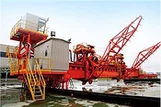
As a supplier of Bucket Wheel Ship Unloaders, I've witnessed firsthand the critical role these machines play in the efficient transfer of bulk materials from ships to storage facilities. The unloading efficiency of a Bucket Wheel Ship Unloader is influenced by a multitude of factors, each of which requires careful consideration to optimize performance. In this blog, I'll delve into the key elements that can either enhance or hinder the unloading process, providing insights that can help you make informed decisions when it comes to your bulk material handling needs.
1. Design and Configuration
The design and configuration of a Bucket Wheel Ship Unloader are fundamental to its unloading efficiency. The size and capacity of the bucket wheel, the length and angle of the Boom Jib, and the overall layout of the machine all contribute to its ability to handle different types of cargo and vessel sizes.


- Bucket Wheel Size and Capacity: A larger bucket wheel can typically handle more material per rotation, increasing the overall unloading rate. However, it's important to balance size with the specific requirements of your operation, as larger wheels may require more power and can be more difficult to maneuver in certain situations.
- Boom Jib Length and Angle: The length and angle of the boom jib determine the reach and height of the bucket wheel, allowing it to access different areas of the ship's hold. A longer boom jib provides greater reach, while an adjustable angle can optimize the unloading position for different vessel sizes and cargo distributions.
- Overall Layout: The layout of the Bucket Wheel Ship Unloader, including the position of the conveyor system and the support structure, can also impact efficiency. A well-designed layout minimizes material transfer distances and reduces the risk of congestion, ensuring a smooth and continuous unloading process.
2. Material Characteristics
The characteristics of the material being unloaded, such as its density, particle size, and moisture content, can have a significant impact on the efficiency of a Bucket Wheel Ship Unloader.
- Density: Dense materials require more energy to lift and move, which can slow down the unloading process. Additionally, high-density materials may cause excessive wear on the bucket wheel and other components, reducing their lifespan and increasing maintenance costs.
- Particle Size: The particle size of the material can affect the flowability and handling characteristics of the cargo. Fine particles tend to be more cohesive and can clog the bucket wheel and conveyor system, while large particles may require larger buckets or additional fragmentation equipment to ensure efficient unloading.
- Moisture Content: Moisture content can also impact the flowability of the material, as wet or sticky materials are more difficult to handle and can cause blockages in the bucket wheel and conveyor system. Excessive moisture can also lead to corrosion and damage to the equipment, reducing its reliability and efficiency.
3. Vessel Characteristics
The size, shape, and condition of the vessel being unloaded can also influence the efficiency of a Bucket Wheel Ship Unloader.
- Vessel Size: Larger vessels typically require more time and effort to unload, as the bucket wheel must cover a greater area to access all of the cargo. Additionally, larger vessels may have deeper holds, which can require a longer boom jib or additional equipment to reach the bottom.
- Vessel Shape: The shape of the ship's hold can also affect the unloading process, as irregularly shaped holds may require more precise maneuvering of the bucket wheel to ensure complete unloading. Additionally, some vessels may have obstructions or structural features that can impede the movement of the bucket wheel.
- Vessel Condition: The condition of the vessel, including the cleanliness of the hold and the presence of any damage or debris, can also impact efficiency. A dirty or damaged hold can make it more difficult to access the cargo and can cause wear and tear on the bucket wheel and other components.
4. Operating Conditions
The operating conditions, such as weather, temperature, and wind speed, can also have a significant impact on the efficiency of a Bucket Wheel Ship Unloader.
- Weather: Adverse weather conditions, such as heavy rain, snow, or high winds, can make it difficult to operate the Bucket Wheel Ship Unloader safely and efficiently. Rain and snow can increase the moisture content of the material, making it more difficult to handle, while high winds can affect the stability of the machine and make it more difficult to control the bucket wheel.
- Temperature: Extreme temperatures can also impact the performance of the Bucket Wheel Ship Unloader, as cold temperatures can cause the material to become more brittle and difficult to handle, while hot temperatures can cause the equipment to overheat and reduce its efficiency.
- Wind Speed: High wind speeds can affect the stability of the Bucket Wheel Ship Unloader and make it more difficult to control the bucket wheel. Additionally, strong winds can cause the material to be blown away, reducing the efficiency of the unloading process and creating a safety hazard.
5. Maintenance and Upkeep
Regular maintenance and upkeep are essential to ensure the efficient operation of a Bucket Wheel Ship Unloader. Neglecting maintenance can lead to equipment breakdowns, reduced performance, and increased downtime, all of which can have a significant impact on your bottom line.
- Scheduled Maintenance: Establishing a regular maintenance schedule is crucial to keep the Bucket Wheel Ship Unloader in optimal condition. This includes routine inspections, lubrication, and replacement of worn or damaged components.
- Training and Operator Skill: Proper training and operator skill are also important factors in maintaining the efficiency of the Bucket Wheel Ship Unloader. Well-trained operators are more likely to follow proper operating procedures, identify potential issues early on, and take appropriate action to prevent breakdowns.
- Upgrades and Modernization: As technology advances, it may be beneficial to consider upgrading or modernizing your Bucket Wheel Ship Unloader to improve its efficiency and performance. This can include installing new control systems, upgrading the bucket wheel design, or implementing energy-saving features.
6. Complementary Equipment
The efficiency of a Bucket Wheel Ship Unloader can also be enhanced by the use of complementary equipment, such as Chain Bucket Ship Unloaders and Buried Scraper Type Ship Unloaders.
- Chain Bucket Ship Unloaders: Chain Bucket Ship Unloaders are designed to handle a wide range of bulk materials, including coal, ore, and grain. They offer a high unloading rate and can be used in conjunction with a Bucket Wheel Ship Unloader to increase overall efficiency, especially for large vessels or high-volume operations.
- Buried Scraper Type Ship Unloaders: Buried Scraper Type Ship Unloaders are ideal for unloading fine-grained materials, such as cement and fertilizer. They operate below the surface of the material, minimizing dust emissions and reducing the risk of material spillage. When used in combination with a Bucket Wheel Ship Unloader, they can provide a comprehensive solution for handling different types of bulk materials.
Conclusion
The unloading efficiency of a Bucket Wheel Ship Unloader is influenced by a variety of factors, including design and configuration, material characteristics, vessel characteristics, operating conditions, maintenance and upkeep, and the use of complementary equipment. By understanding these factors and taking steps to optimize them, you can improve the performance of your Bucket Wheel Ship Unloader, reduce operating costs, and increase the overall productivity of your bulk material handling operation.
If you're interested in learning more about our Bucket Wheel Ship Unloaders or discussing how we can help you optimize your unloading process, please don't hesitate to contact us. Our team of experts is available to provide you with personalized solutions and support to meet your specific needs.
References
- [Title of Book 1], Author 1, Publisher 1, Year 1
- [Title of Book 2], Author 2, Publisher 2, Year 2
- [Title of Journal Article 1], Author 3, Journal Name 1, Volume 1, Issue 1, Pages 1-10, Year 3
- [Title of Journal Article 2], Author 4, Journal Name 2, Volume 2, Issue 2, Pages 11-20, Year 4