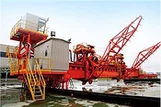
As a supplier of Bucket Wheel Stackers, I understand the importance of quality standards in ensuring the efficient and reliable operation of these heavy - duty machines. Bucket Wheel Stackers are widely used in industries such as mining, power generation, and port handling for stacking bulk materials like coal, ore, and grains. In this blog, I will delve into the key quality standards that a Bucket Wheel Stacker should meet.
Structural Integrity
The structural design of a Bucket Wheel Stacker is the foundation of its quality. The frame and main components must be able to withstand the heavy loads and harsh operating conditions. High - strength steel is commonly used in the construction of the stacker's structure. The steel should have proper mechanical properties, such as yield strength and tensile strength, which are determined by international standards like ASTM (American Society for Testing and Materials) or ISO (International Organization for Standardization).
For example, the legs and boom of the stacker need to be designed to resist bending and torsional forces. The welding quality is also crucial. Welds should be inspected using non - destructive testing methods, such as ultrasonic testing or radiographic testing, to ensure there are no internal defects like cracks or porosity. Any sub - standard welding can lead to structural failures over time, endangering the safety of the equipment and operators.
Bucket Wheel Performance
The bucket wheel is the heart of the Bucket Wheel Stacker. Its performance directly affects the material handling capacity. The design of the buckets should be optimized for the type of material being handled. For abrasive materials like iron ore, the buckets need to be made of wear - resistant materials, such as high - manganese steel or hard - faced alloys.
The rotational speed of the bucket wheel is another important factor. It should be carefully calibrated to match the stacking or reclaiming requirements. A too - high speed may cause excessive wear on the buckets and other components, while a too - low speed may result in inefficient material handling. The power transmission system that drives the bucket wheel, including the motors, gearboxes, and couplings, must be of high quality to ensure smooth and reliable operation.
Mobility and Positioning
Bucket Wheel Stackers often need to move along a rail or a fixed path. The mobility system, including the wheels, axles, and drive mechanisms, should be designed to provide stable and precise movement. The wheels should have sufficient load - bearing capacity and good traction to prevent slipping. The braking system is essential for safety, allowing the stacker to stop quickly in case of an emergency.
Accurate positioning is also crucial, especially when multiple stackers are operating in the same area or when precise stacking patterns are required. Positioning sensors, such as encoders or laser distance sensors, can be installed to provide real - time information about the stacker's position. This data can be used to control the movement of the stacker and ensure it is in the correct position for stacking or reclaiming operations.
Electrical and Control Systems
The electrical system of a Bucket Wheel Stacker is complex, consisting of power distribution, control circuits, and automation systems. All electrical components, such as motors, switches, and relays, should meet relevant electrical safety standards. They need to be protected against over - current, over - voltage, and short - circuits.
The control system is responsible for coordinating the various functions of the stacker, including the movement of the boom, the rotation of the bucket wheel, and the operation of the conveyor belts. It should be user - friendly and allow operators to easily adjust the operating parameters. Programmable Logic Controllers (PLCs) are commonly used in modern stackers to provide flexible and reliable control. The control system should also have built - in diagnostic functions to quickly identify and troubleshoot any problems.
Environmental Adaptability
Bucket Wheel Stackers are often exposed to harsh environmental conditions, such as extreme temperatures, high humidity, dust, and corrosive atmospheres. The equipment should be designed to withstand these conditions. For example, in coastal areas where the air is salty, the metal components need to be protected with anti - corrosion coatings.


The stacker should also be designed to minimize its environmental impact. For instance, dust suppression systems can be installed to reduce the amount of dust generated during the material handling process. This not only protects the environment but also improves the working conditions for operators.
Types of Bucket Wheel Stackers and Their Quality Standards
There are different types of Bucket Wheel Stackers, each with its own specific quality requirements.
- Bridge Bucket Wheel Stacker Reclaimer: This type of stacker is suitable for large - scale material handling in ports and power plants. It operates on a bridge structure that spans over the stockpile. The bridge structure needs to be extremely rigid to ensure stable operation. You can find more information about Bridge Bucket Wheel Stacker Reclaimer here. The support columns and the connection between the bridge and the columns must be designed to withstand the heavy loads and dynamic forces during operation.
- Bucket Wheel Stacker Reclaimer: A general - purpose machine that can both stack and reclaim materials. The transition between the stacking and reclaiming modes should be smooth and reliable. The conveyor belts that transfer the materials to and from the stacker need to be properly aligned and tensioned to prevent material spillage. For more details on Bucket Wheel Stacker Reclaimer, visit this link.
- Cantilever Bucket Wheel Stacker: This type of stacker has a cantilevered boom, which provides more flexibility in material stacking. The boom structure needs to be carefully designed to balance the weight of the bucket wheel and the materials being handled. The pivot point of the boom should be strong and well - lubricated to ensure smooth rotation. You can learn more about Cantilever Bucket Wheel Stacker here.
Safety Features
Safety is a top priority in the design and operation of Bucket Wheel Stackers. There should be multiple safety features installed, such as emergency stop buttons, safety barriers, and warning signs. The stacker should also be equipped with safety interlocks to prevent certain operations from being carried out under unsafe conditions.
For example, the stacker should not be able to move if the access doors to the control room or maintenance areas are open. The operators should be provided with proper personal protective equipment, and the equipment should be regularly inspected and maintained to ensure all safety features are in working order.
Maintenance and Serviceability
A high - quality Bucket Wheel Stacker should be designed for easy maintenance. Access to key components, such as the motors, gearboxes, and buckets, should be convenient. There should be clear maintenance manuals and schedules provided by the manufacturer.
The availability of spare parts is also crucial. A reliable supplier should have a well - stocked inventory of spare parts to minimize downtime in case of component failures. Regular maintenance and timely replacement of worn - out parts can extend the service life of the stacker and ensure its continuous and efficient operation.
Conclusion
In conclusion, the quality standards for a Bucket Wheel Stacker cover a wide range of aspects, from structural integrity to safety features. As a supplier, we are committed to meeting these high - quality standards to provide our customers with reliable and efficient equipment.
If you are in the market for a Bucket Wheel Stacker and are looking for a supplier who understands and adheres to these quality standards, we would be more than happy to discuss your specific requirements. Contact us to start a procurement negotiation and find the best Bucket Wheel Stacker solution for your business.
References
- ASTM International Standards for Steel and Welding.
- ISO Standards for Electrical Safety and Mechanical Design.
- Manufacturer's Technical Manuals for Bucket Wheel Stackers.