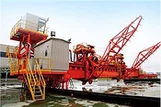
As a supplier of Mobile Stacker Reclaimers, I understand the paramount importance of safety in these complex and powerful machines. Mobile Stacker Reclaimers are widely used in industries such as mining, ports, and power plants to handle bulk materials efficiently. To ensure the well - being of operators and the smooth operation of the equipment, a variety of safety devices are incorporated into these machines.
1. Overload Protection Devices
Overload is a common issue in Mobile Stacker Reclaimers, which can lead to mechanical failures, motor burn - outs, and even pose a significant safety risk. To prevent such situations, load sensors are installed at critical points of the machine. These sensors continuously monitor the load on the conveyor belts, booms, and other components. When the load exceeds the pre - set limit, the sensor sends a signal to the control system.
The control system then takes immediate action, such as reducing the feed rate of the materials or stopping the operation of the relevant components. For example, if the conveyor belt is overloaded, the system may slow down the belt speed or stop the feeding mechanism to relieve the load. This not only protects the equipment from damage but also reduces the risk of accidents caused by overloading.
2. Emergency Stop Buttons
Emergency stop buttons are one of the most basic yet crucial safety devices on a Mobile Stacker Reclaimer. These buttons are strategically placed throughout the machine, including the operator's cab, along the conveyor belts, and near the working areas. In case of an emergency, such as a mechanical failure, a person in danger, or a fire, any operator or worker can quickly press the emergency stop button.
Once the button is pressed, the entire machine comes to an immediate halt. All motors stop running, and the conveyor belts stop moving. This gives the operators and workers time to assess the situation and take appropriate measures to eliminate the danger. The emergency stop buttons are designed to be easily accessible and highly visible, ensuring that they can be found and pressed quickly in a critical situation.
3. Anti - Collision Devices
In a busy industrial environment, Mobile Stacker Reclaimers often operate in close proximity to other equipment, structures, or even other Mobile Stacker Reclaimers. Anti - collision devices are installed to prevent collisions between the machine and other objects. These devices use various technologies, such as ultrasonic sensors, laser scanners, and radar systems.
The sensors continuously scan the surrounding area of the machine. When an object is detected within a certain distance, the device sends an alarm signal to the operator. The alarm can be a visual signal, such as a flashing light, or an audible signal, such as a siren. If the operator does not take appropriate action, the anti - collision device can automatically slow down or stop the machine to avoid a collision.
4. Belt Slippage Detection Devices
The conveyor belts on a Mobile Stacker Reclaimer are essential for transporting bulk materials. Belt slippage can occur due to various reasons, such as excessive load, worn - out belts, or improper tension. Belt slippage detection devices are used to monitor the movement of the conveyor belts.
These devices typically use sensors to measure the speed of the belt. If the belt speed drops below a certain threshold, indicating slippage, the device sends a signal to the control system. The control system can then take corrective actions, such as adjusting the belt tension or stopping the operation to inspect the belt. This helps to prevent material spillage, belt damage, and potential accidents caused by belt slippage.
5. Fire Detection and Suppression Systems
Fires can be extremely dangerous in a Mobile Stacker Reclaimer, especially considering the presence of flammable materials such as coal or oil. Fire detection systems are installed to detect the presence of fire at an early stage. These systems use smoke detectors, heat sensors, and flame detectors.
Once a fire is detected, the system triggers an alarm, alerting the operators and workers. At the same time, the fire suppression system is activated. The fire suppression system can use various methods, such as water sprinklers, foam extinguishers, or dry chemical extinguishers, depending on the type of fire and the nature of the materials being handled. The goal is to quickly extinguish the fire and prevent it from spreading, reducing the damage to the equipment and ensuring the safety of the personnel.
6. Fall Protection Systems
Mobile Stacker Reclaimers often have elevated platforms, walkways, and ladders for maintenance and inspection purposes. Fall protection systems are installed to prevent workers from falling from these elevated areas. These systems include guardrails, safety nets, and personal fall arrest systems.
Guardrails are installed along the edges of the elevated platforms and walkways to provide a physical barrier. Safety nets are placed below the elevated areas to catch workers in case they fall. Personal fall arrest systems, such as harnesses and lanyards, are provided to workers when they need to work at heights. Workers are required to wear these systems at all times when working in elevated areas to ensure their safety.
7. Dust Suppression Systems
Dust is a common problem in the operation of Mobile Stacker Reclaimers, especially when handling dry bulk materials such as coal, cement, or ore. Dust can not only cause environmental pollution but also pose a health risk to the operators and workers. Dust suppression systems are installed to reduce the amount of dust generated during the operation.
These systems typically use water sprays or fogging nozzles to wet the materials and suppress the dust. The water sprays are strategically placed at the loading and unloading points, along the conveyor belts, and in the working areas. By keeping the materials moist, the dust is prevented from becoming airborne, reducing the risk of respiratory diseases and improving the working environment.
8. Electrical Safety Devices
Mobile Stacker Reclaimers rely on a complex electrical system to operate. Electrical safety devices are essential to protect the equipment and the personnel from electrical hazards. These devices include circuit breakers, ground fault circuit interrupters (GFCIs), and insulation monitoring devices.
Circuit breakers are used to protect the electrical circuits from overcurrent. When the current in a circuit exceeds the rated value, the circuit breaker trips, cutting off the power supply to the circuit. GFCIs are designed to detect ground faults, which can cause electric shocks. When a ground fault is detected, the GFCI quickly cuts off the power to prevent injury. Insulation monitoring devices are used to monitor the insulation resistance of the electrical system. If the insulation resistance drops below a certain level, indicating a potential electrical problem, the device sends an alarm signal to the operator.
Conclusion
In conclusion, the safety devices on a Mobile Stacker Reclaimer play a vital role in ensuring the safe and efficient operation of the machine. From overload protection to fire suppression, each device is designed to address a specific safety concern. As a supplier of Mobile Stacker Reclaimers, we are committed to providing high - quality machines equipped with the latest safety technologies.
If you are interested in our Mobile Stacker Reclaimers or have any questions about the safety devices on these machines, we invite you to contact us for further information and to discuss your procurement needs. Our team of experts is ready to assist you in finding the most suitable solution for your business.
References
- Industrial Machinery Safety Standards Handbook
- Safety Guidelines for Bulk Material Handling Equipment
You can also explore our other related products, such as the Wheeled Bulk Reception Feeder, Half Portal Type Scraper Reclaimer, and Tracked Bulk Reception Feeder.