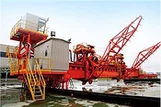
As a supplier of Continuous Ship Unloaders, I understand the critical importance of sealing measures in these machines to prevent leakage. Leakage not only leads to material loss but also poses environmental risks and can cause damage to the equipment itself. In this blog, I will delve into the various sealing measures employed in Continuous Ship Unloaders and their significance.

The Need for Sealing in Continuous Ship Unloaders
Continuous Ship Unloaders are designed to efficiently transfer bulk materials from ships to storage facilities or transportation systems. These materials can range from grains and coal to ores and fertilizers. During the unloading process, there are multiple points where leakage can occur, such as at the connection between the unloader and the ship's hold, along the conveyor belts, and at the discharge points.
Leakage of bulk materials can have several negative consequences. Firstly, it results in a loss of valuable resources, which can be costly for the operators. Secondly, spilled materials can contaminate the surrounding environment, including the water bodies and the air, leading to potential environmental hazards. Moreover, the accumulation of spilled materials around the equipment can cause mechanical problems, such as clogging and increased wear and tear, reducing the overall efficiency and lifespan of the unloader.
Sealing Measures in Different Parts of the Continuous Ship Unloader
Sealing at the Ship - Hold Interface
The interface between the Continuous Ship Unloader and the ship's hold is a crucial area where sealing is required. One common method is the use of flexible sealing skirts. These skirts are typically made of rubber or other flexible materials and are installed around the intake of the unloader. They conform to the shape of the ship's hold, creating a tight seal that prevents materials from spilling out during the unloading process.
Another approach is the use of inflatable seals. These seals can be inflated to create a more secure and adjustable barrier between the unloader and the ship's hold. Inflatable seals are particularly useful when dealing with uneven surfaces or when a higher level of sealing is required.
Sealing of Conveyor Belts
Conveyor belts are an integral part of Continuous Ship Unloaders, and proper sealing is essential to prevent material leakage along their length. One of the primary sealing measures for conveyor belts is the use of side skirts. These skirts are installed along the edges of the conveyor belt and are made of a durable, flexible material. They prevent materials from falling off the sides of the belt during transportation.
In addition to side skirts, belt cleaners are also used to remove any residual materials from the belt surface. These cleaners help to maintain a clean belt, reducing the risk of material buildup and subsequent leakage. Some advanced belt cleaners are designed to be self - adjusting, ensuring optimal performance over time.
Sealing at Discharge Points
The discharge points of Continuous Ship Unloaders, where the materials are transferred to the storage or transportation system, are also prone to leakage. To address this, various types of chutes and spouts are used with proper sealing mechanisms.
One common sealing method for discharge chutes is the use of dust seals. These seals are designed to prevent the escape of fine dust particles during the discharge process. They are typically made of a fabric or rubber material and are installed around the opening of the chute.
Another approach is the use of telescopic spouts. These spouts can be adjusted in length to maintain a close distance between the unloader and the receiving vessel or storage area. This reduces the free - fall distance of the materials, minimizing the generation of dust and the risk of leakage.
Types of Continuous Ship Unloaders and Their Sealing Considerations
Buried Scraper Type Ship Unloader
The Buried Scraper Type Ship Unloader uses a buried scraper conveyor to move materials from the ship's hold. Sealing in this type of unloader is crucial at the connection between the scraper conveyor and the ship's hold. Specialized seals are used to prevent materials from leaking out at the intake point. Additionally, the scraper chain and the conveyor trough need to be properly sealed to prevent internal leakage.
Catenary Bucket Unloader
The Catenary Bucket Unloader operates by using a series of buckets to scoop up materials from the ship's hold. Sealing in this type of unloader is important at the bucket - conveyor interface and at the discharge point. The buckets need to be sealed to prevent materials from spilling during the lifting and transfer process. At the discharge point, proper chutes and dust seals are used to ensure a clean and efficient transfer of materials.
Fixed Screw Ship Unloader
The Fixed Screw Ship Unloader uses a screw conveyor to move materials. Sealing in this unloader is critical at the screw - housing interface. The housing needs to be properly sealed to prevent materials from leaking out along the length of the screw. Additionally, the intake and discharge points of the screw conveyor require effective sealing to prevent spillage.

The Role of Maintenance in Sealing Performance
Proper maintenance is essential to ensure the effectiveness of the sealing measures in Continuous Ship Unloaders. Regular inspections should be carried out to check for any signs of wear and tear on the seals, such as cracks, tears, or loss of elasticity. Damaged seals should be replaced promptly to maintain the integrity of the sealing system.
Lubrication of moving parts is also important, as it can reduce friction and wear on the seals. For example, the conveyor belt rollers and the chains in the scraper conveyor should be properly lubricated to ensure smooth operation and prevent premature seal failure.
In addition, cleaning the equipment regularly is crucial to prevent the accumulation of materials that can damage the seals. This includes cleaning the conveyor belts, the chutes, and the intake and discharge points.
Conclusion
Sealing measures in Continuous Ship Unloaders play a vital role in preventing leakage, reducing material loss, and protecting the environment. By employing a combination of flexible sealing skirts, inflatable seals, side skirts, belt cleaners, dust seals, and telescopic spouts, we can ensure a high level of sealing performance in different parts of the unloader.
Whether you are using a Buried Scraper Type Ship Unloader, a Catenary Bucket Unloader, or a Fixed Screw Ship Unloader, proper sealing and maintenance are essential for optimal operation. If you are in the market for a Continuous Ship Unloader or need to upgrade your existing sealing system, we are here to help. Contact us to discuss your specific requirements and let us provide you with the best solutions for your bulk material handling needs.
References
- Smith, J. (2018). Bulk Material Handling Equipment: Design and Operation. Elsevier.
- Brown, A. (2020). Sealing Technologies for Industrial Equipment. Wiley.
- International Maritime Organization. (2021). Guidelines for the Prevention of Pollution from Bulk Cargo Handling.