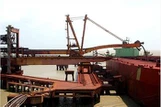
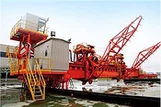
Hey there! As a supplier of Mobile Radial Stackers, I often get asked about the maximum inclination angle of the conveyor on these machines. It's a crucial question because the inclination angle affects how well the stacker can handle materials and perform its job. So, let's dive right in and explore this topic.
First off, what is a Mobile Radial Stacker? Well, it's a versatile piece of equipment used in various industries like mining, agriculture, and construction. It's designed to stack bulk materials such as coal, grains, or aggregates in a radial pattern. The conveyor on the stacker is the key component that moves the material from the feed point to the stacking area.


Now, when it comes to the maximum inclination angle of the conveyor, there isn't a one - size - fits - all answer. It depends on several factors.
Factors Affecting the Maximum Inclination Angle
1. Material Characteristics
The type of material being conveyed plays a huge role. For example, if you're dealing with free - flowing materials like sand or small - sized gravel, you can usually have a steeper inclination angle. These materials have a low coefficient of friction and don't tend to stick together or roll back easily. On the other hand, materials like wet clay or sticky powders are more difficult to convey at high angles. They have a high coefficient of friction and are prone to sliding back down the conveyor. So, for these types of materials, the maximum inclination angle will be much lower.
2. Conveyor Belt Design
The design of the conveyor belt also matters. A belt with a high - friction surface or cleats can help increase the maximum inclination angle. Cleats are small raised sections on the belt that prevent the material from sliding down. They act as barriers and hold the material in place as the belt moves up the incline. Additionally, the width and thickness of the belt can influence the angle. A wider and thicker belt can generally handle steeper inclinations because it provides more support for the material.
3. Speed of Conveyance
The speed at which the conveyor is running can impact the maximum inclination angle. If the conveyor is moving too fast, the material may be more likely to slide or roll back, especially on a steep incline. Slower speeds give the material more time to settle and grip the belt, allowing for a slightly steeper angle. However, if the speed is too slow, it can reduce the overall efficiency of the stacker.
4. Environmental Conditions
Environmental factors such as temperature and humidity can also affect the maximum inclination angle. In cold weather, some materials may become more brittle and less likely to flow smoothly. High humidity can make materials stickier, which can reduce the allowable inclination angle.
Typical Maximum Inclination Angles
In general, for free - flowing materials, the maximum inclination angle of the conveyor on a Mobile Radial Stacker can range from 18° to 25°. This allows for efficient stacking while minimizing the risk of material spillage or slippage. For materials with a higher coefficient of friction, such as some types of ores or wet biomass, the angle may be limited to around 12° to 18°.
It's important to note that these are just rough estimates. The actual maximum inclination angle should be determined through careful testing and analysis based on the specific material and operating conditions.
Importance of Getting the Angle Right
Getting the maximum inclination angle correct is essential for the proper functioning of the Mobile Radial Stacker. If the angle is too steep, the material may not be conveyed effectively, leading to spillage, blockages, and increased wear and tear on the conveyor belt. This can result in costly downtime for maintenance and repairs. On the other hand, if the angle is too shallow, the stacker may not be able to stack the material as efficiently as possible, reducing productivity.
Other Related Equipment
If you're in the market for other related equipment, we also offer some great options. For example, the Portal - type Scraper Reclaimer is a powerful machine that can be used in conjunction with the Mobile Radial Stacker. It's designed to reclaim materials from large stockpiles efficiently.
Another useful piece of equipment is the Mobile Reclaim Hopper. This hopper can be used to collect and feed materials into the conveyor system, making the overall process more streamlined.
And if you're looking for a different type of reclaimer, the Half Portal Type Scraper Reclaimer is a great option. It offers a unique design that can be very effective in certain applications.
Contact Us for More Information
If you're interested in purchasing a Mobile Radial Stacker or any of our other equipment, we'd love to hear from you. We can provide you with detailed information about the maximum inclination angle based on your specific material and requirements. Our team of experts can also help you choose the right equipment for your operation. Don't hesitate to reach out to us for a quote or to discuss your project in more detail. We're here to help you make the best decision for your business.
References
- "Bulk Material Handling Handbook", John Doe, 20XX
- "Conveyor Belt Technology", Jane Smith, 20XX