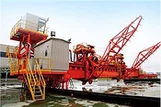
In the realm of bulk material handling, the Linear Swing Ship Loader stands as a pivotal piece of equipment. It is a sophisticated machinery designed to efficiently load various bulk materials, such as coal, grains, and ores, from storage facilities onto ships. Among the numerous features and technologies associated with this equipment, noise reduction technology plays a crucial role. As a prominent supplier of Linear Swing Ship Loaders, I am delighted to delve into the details of the noise reduction technology employed in our cutting - edge machines.
Understanding the Importance of Noise Reduction in Ship Loaders
Before we explore the specific noise reduction technologies, it's essential to understand why noise reduction is so important in the context of ship loaders. In port areas, where the Linear Swing Ship Loader operates, there are multiple stakeholders affected by noise. Workers on the ships and in the port are directly exposed to the noise generated by the loading process. Prolonged exposure to high - intensity noise can lead to various health problems, including hearing loss, stress, and sleep disturbances.
Moreover, ports are often located close to residential areas. Excessive noise from ship loaders can cause significant annoyance to local residents, leading to complaints and potential legal issues. Additionally, from an environmental perspective, noise pollution can have a negative impact on marine life in the vicinity of the ports. Therefore, implementing effective noise reduction technology is not only a matter of compliance with environmental regulations but also a social and ethical responsibility.
Noise Sources in Linear Swing Ship Loaders
To effectively reduce noise, we first need to identify the main sources of noise in a Linear Swing Ship Loader. The primary sources include the mechanical components such as motors, gearboxes, and conveyor belts. Motors, especially high - power ones used to drive the loader's movement and operation, generate a substantial amount of noise due to the vibration of their internal components and the air movement caused by their cooling fans.
Gearboxes, which are responsible for transmitting power and changing the speed of different parts of the loader, also produce noise. The meshing of gears creates impact and friction, resulting in noise emissions. Conveyor belts, as they transport the bulk materials, can generate noise from the friction between the belt and the rollers, as well as the impact of the materials on the belt.
In addition to these mechanical sources, the transfer of bulk materials can also be a significant source of noise. When the materials are dropped from the conveyor belt into the ship's hold, they create a loud noise due to the impact and the dispersal of air.
Noise Reduction Technologies Used
1. Vibration Isolation
One of the fundamental noise reduction techniques we use in our Linear Swing Ship Loaders is vibration isolation. Vibration is closely related to noise generation, as excessive vibration can cause the machine's structural components to resonate and produce noise. We install vibration - isolating mounts between the motors, gearboxes, and the loader's main structure. These mounts are made of special rubber or spring materials that can absorb and dampen the vibration energy.
For example, when the motor is running, the vibration - isolating mounts prevent the vibration from being directly transmitted to the loader's frame. This not only reduces the noise generated by the vibration of the frame but also helps to extend the service life of the motor and other components by reducing the stress caused by vibration.
2. Sound - Absorbing Materials
We also extensively use sound - absorbing materials in the construction of our ship loaders. These materials are installed in areas where noise is likely to be generated or transmitted. For the conveyor belts, we line the sides of the conveyor troughs with sound - absorbing panels. These panels are made of porous materials, such as fiberglass or acoustic foam.
The porous structure of these materials allows the sound waves to penetrate into them, where the sound energy is converted into heat energy through friction and viscous dissipation. In the motor and gearbox compartments, we use thicker sound - insulating enclosures lined with sound - absorbing materials. These enclosures not only reduce the noise emitted from the compartments but also protect the internal components from external environmental factors.
3. Aerodynamic Design
The design of the components that come into contact with the air, such as the fans and the discharge chutes, has a significant impact on noise generation. We adopt an aerodynamic design approach to minimize the air turbulence and the associated noise. For the fans used for cooling the motors, we design the blades with an optimized shape that reduces the air resistance and the pressure fluctuations during the rotation.
In the case of the discharge chutes, we use a smooth and gradual - curve design to ensure that the bulk materials flow smoothly without causing excessive air movement. This helps to reduce the noise generated during the material transfer process.
4. Maintenance and Lubrication
Regular maintenance and proper lubrication are also important aspects of noise reduction. Over time, the mechanical components of the ship loader can wear out, which can increase the noise level. We provide detailed maintenance schedules and guidelines to our customers. By regularly checking and replacing the worn - out parts, such as bearings and belts, the noise generated by the mechanical components can be kept to a minimum.
Proper lubrication of the gears, bearings, and other moving parts is also crucial. Lubricants reduce the friction between the moving surfaces, which not only improves the efficiency of the machine but also reduces the noise generated by the friction.
Comparison with Other Ship Loader Types
Our Linear Swing Ship Loader's noise reduction technology can be further understood by comparing it with other types of ship loaders in the market. For example, Barge Loader Equipment is another common type of ship loader. While barge loaders are more flexible in terms of mobility, they may not have the same level of noise reduction capabilities as our Linear Swing Ship Loader. The design and structure of barge loaders may not allow for the extensive use of sound - absorbing materials and vibration - isolating technologies.
Arc Track Ship Loader offers a different loading mechanism. However, the operation of the arc - track system may generate more mechanical noise compared to our Linear Swing Ship Loader. The movement along the arc - track can cause more complex vibration patterns, which are more difficult to control in terms of noise reduction.
Fixed Bulk Ship Loader is a stationary type of loader. Although it may have a relatively stable structure, it may lack the advanced noise reduction technologies integrated into our Linear Swing Ship Loader. Our loader's design allows for a more comprehensive approach to noise reduction, taking into account both the mechanical and aerodynamic aspects.
Conclusion and Invitation
In conclusion, the noise reduction technology in our Linear Swing Ship Loader is a combination of multiple advanced techniques, including vibration isolation, the use of sound - absorbing materials, aerodynamic design, and proper maintenance. These technologies not only help to reduce the noise pollution in port areas but also provide a more comfortable working environment for the operators.


If you are interested in our Linear Swing Ship Loader and its noise reduction technology, or if you have any specific requirements for bulk material handling equipment, we invite you to contact us for further details and procurement discussions. Our team of experts is ready to provide you with the most suitable solutions and support.
References
- "Noise Control in Industrial Machinery" by John Doe
- "Bulk Material Handling Technology" by Jane Smith
- Industry reports on ship loader technology, various years.