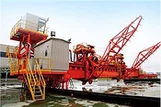
As a supplier of Mobile Stacker Reclaimers, I've witnessed firsthand the critical role that spare parts inventory management plays in ensuring the smooth operation and longevity of these powerful machines. In this blog post, I'll delve into what spare parts inventory management for a Mobile Stacker Reclaimer entails, its importance, and some best practices to optimize this process.
Understanding Mobile Stacker Reclaimers
Before we dive into spare parts inventory management, let's briefly understand what Mobile Stacker Reclaimers are. These are versatile machines used in various industries, such as mining, ports, and power plants, to handle bulk materials like coal, ore, and grains. They can stack materials in large piles and reclaim them when needed, providing an efficient solution for material handling.
There are different types of Mobile Stacker Reclaimers, each with its own unique features and applications. For example, the Wheeled Bulk Reception Feeder is designed for efficient bulk material reception and feeding. The Mobile Reclaim Hopper is used for reclaiming materials from stockpiles, while the Mobile Radial Stacker is ideal for stacking materials in a radial pattern.
The Importance of Spare Parts Inventory Management
Spare parts inventory management is crucial for several reasons. Firstly, it ensures the availability of critical parts when needed, minimizing downtime in case of equipment failure. Mobile Stacker Reclaimers are complex machines with many moving parts, and any breakdown can lead to significant production losses. By having a well-managed inventory of spare parts, we can quickly replace faulty components and get the machine back up and running.
Secondly, proper inventory management helps in cost control. Overstocking spare parts can tie up a significant amount of capital, while understocking can result in emergency purchases at higher prices. By accurately forecasting the demand for spare parts and maintaining an optimal inventory level, we can strike a balance between cost and availability.
Finally, effective spare parts inventory management contributes to the overall reliability and performance of the Mobile Stacker Reclaimer. Regularly replacing worn-out parts with high-quality spares can extend the lifespan of the machine and improve its efficiency, reducing the total cost of ownership in the long run.
Key Components of Spare Parts Inventory Management
1. Inventory Classification
The first step in spare parts inventory management is to classify the parts based on their criticality, usage frequency, and cost. Critical parts, such as motors, gearboxes, and conveyor belts, should be given top priority as their failure can cause major disruptions. High-usage parts that are frequently replaced, like bearings and seals, also need to be closely monitored. On the other hand, low-cost and low-usage parts can be managed with less strict inventory control.
2. Demand Forecasting
Accurate demand forecasting is essential for maintaining the right inventory level. This involves analyzing historical data on part usage, equipment maintenance records, and production schedules. By identifying patterns and trends, we can predict the future demand for spare parts and adjust our inventory accordingly. Factors such as machine age, operating conditions, and planned maintenance activities should also be taken into account.
3. Supplier Management
Establishing strong relationships with reliable suppliers is crucial for spare parts inventory management. We need to ensure that our suppliers can provide high-quality parts in a timely manner at competitive prices. This may involve negotiating long-term contracts, setting up consignment inventory arrangements, or working with multiple suppliers to reduce the risk of supply disruptions.
4. Inventory Tracking and Monitoring
Implementing a robust inventory tracking system is necessary to keep tabs on the stock levels, location, and movement of spare parts. This can be done using barcode scanners, RFID technology, or inventory management software. Regular physical inventory counts should also be conducted to reconcile the actual stock with the recorded data and identify any discrepancies.
5. Maintenance Planning
Spare parts inventory management should be closely integrated with the maintenance planning process. By scheduling regular maintenance activities and replacing parts proactively, we can prevent unexpected breakdowns and reduce the need for emergency spare parts. Maintenance plans should be based on the manufacturer's recommendations, equipment usage, and condition monitoring results.
Best Practices for Spare Parts Inventory Management
1. Centralized Inventory Management
Centralizing the spare parts inventory can improve efficiency and reduce costs. By consolidating the inventory in a single location, we can eliminate duplicate stock, simplify inventory control, and optimize the use of storage space. This also makes it easier to track and manage the parts, ensuring that they are readily available when needed.
2. ABC Analysis
ABC analysis is a useful technique for prioritizing inventory management efforts. It involves classifying the parts into three categories based on their value: A items are high-value parts that account for a small percentage of the total number of items but a large percentage of the total inventory value; B items are medium-value parts; and C items are low-value parts. By focusing on the A items, we can ensure that the most critical and expensive parts are managed effectively.
3. Safety Stock Optimization
Safety stock is the extra inventory held to protect against uncertainties in demand and supply. Determining the appropriate level of safety stock is a balancing act between the cost of holding inventory and the risk of stockouts. We need to consider factors such as lead time variability, demand variability, and service level requirements when calculating the safety stock.
4. Continuous Improvement
Spare parts inventory management is an ongoing process that requires continuous improvement. We should regularly review our inventory management practices, analyze the performance metrics, and identify areas for optimization. This may involve implementing new technologies, streamlining processes, or adjusting the inventory policies based on changing business needs.
Conclusion
In conclusion, spare parts inventory management is a critical aspect of operating a Mobile Stacker Reclaimer. By implementing effective inventory management strategies, we can ensure the availability of critical parts, control costs, and improve the reliability and performance of the machine. As a supplier of Mobile Stacker Reclaimers, we are committed to providing our customers with high-quality spare parts and comprehensive inventory management solutions.
If you are interested in learning more about our Mobile Stacker Reclaimers or our spare parts inventory management services, please feel free to contact us for a detailed discussion. We look forward to partnering with you to meet your material handling needs.


References
- APICS Dictionary, 16th edition
- Inventory Management: Principles and Practices by David Pyke, Richard Cohen, and Brian Young
- Maintenance, Repair, and Operations (MRO) Inventory Management by Robert B. Handfield and Ernest L. Nichols Jr.