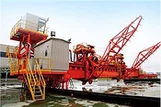
A circular stacker is a highly efficient and versatile piece of equipment widely used in bulk material handling industries. As a leading supplier of circular stackers, I am often asked about the types of materials that these machines can handle. In this blog post, I will explore the diverse range of materials that a circular stacker can manage, highlighting its adaptability and the benefits it offers to various industries.
Coal
Coal is one of the most common materials handled by circular stackers. In the coal mining and power generation industries, large quantities of coal need to be stored and retrieved efficiently. Circular stackers can handle different types of coal, including bituminous, sub - bituminous, and lignite. These machines can stack coal in large circular stockpiles, ensuring proper storage and easy access for subsequent processing. The ability to stack coal evenly helps in maintaining the quality of the coal and reduces the risk of spontaneous combustion. For example, in a coal - fired power plant, a circular stacker can stack coal continuously as it arrives from the mines, and then a reclaimer can retrieve the coal as needed for the power - generation process. You can learn more about our circular stacker solutions on our Circular Stacker page.
Iron Ore
Iron ore is another major material that circular stackers are well - suited to handle. In the steelmaking industry, large amounts of iron ore are required for the production of steel. Circular stackers can stack iron ore fines, pellets, and lump ore. They can create large, stable stockpiles that are essential for maintaining a continuous supply of iron ore to the blast furnaces. The stacking process can be adjusted to ensure proper blending of different grades of iron ore, which is crucial for achieving the desired quality of steel. Our Stationary Stacking Conveyors are designed to work in conjunction with circular stackers to efficiently transport iron ore to the stockpiles.


Grains
The agricultural industry also benefits from the use of circular stackers for handling grains such as wheat, corn, and soybeans. Grains need to be stored in a way that prevents spoilage and allows for easy retrieval. Circular stackers can stack grains in circular silos or open - air stockpiles. The gentle stacking process minimizes damage to the grains, and the ability to stack in a controlled manner helps in maintaining the proper ventilation and temperature within the stockpile. This is important for preserving the quality of the grains during storage. For more information on how our circular stackers can be used for grain handling, refer to our Circular Overpile Stacker Reclaimer page.
Fertilizers
Fertilizers, including urea, ammonium nitrate, and phosphate - based fertilizers, are commonly handled by circular stackers. These materials are often hygroscopic, meaning they can absorb moisture from the air. Circular stackers can stack fertilizers in a way that protects them from the elements and reduces the risk of caking. The stacking process can be optimized to ensure proper air circulation around the fertilizer stockpile, which helps in maintaining its quality. In the fertilizer production and distribution industries, circular stackers play a vital role in efficient storage and handling.
Cement and Cement Clinker
In the cement industry, circular stackers are used to handle cement and cement clinker. Cement clinker is the intermediate product in the cement - making process, and it needs to be stored and transported before being ground into cement. Circular stackers can stack cement clinker in large stockpiles, and the stacking process can be adjusted to ensure proper segregation of different grades of clinker. Similarly, for cement, circular stackers can stack it in a way that minimizes the risk of dust emissions and ensures easy retrieval for packaging or further processing.
Limestone and Dolomite
Limestone and dolomite are important raw materials in various industries, including the construction, steel, and cement industries. Circular stackers can handle these materials efficiently, creating large stockpiles that can be easily managed. The stacking process can be customized to meet the specific requirements of each industry, such as ensuring proper particle size distribution in the stockpile. This is important for the subsequent processing of limestone and dolomite, whether it is for use in cement production or as a flux in the steel - making process.
Salt
Salt is used in a wide range of industries, including the chemical, food, and de - icing industries. Circular stackers can handle different types of salt, such as rock salt and solar salt. They can stack salt in large circular stockpiles, protecting it from moisture and ensuring easy access for retrieval. The stacking process can be designed to prevent the formation of salt bridges and ensure a uniform flow of salt during retrieval.
Wood Chips and Biomass
With the growing interest in renewable energy sources, the handling of wood chips and biomass has become increasingly important. Circular stackers can stack wood chips and biomass in large stockpiles, providing a reliable storage solution for these materials. The stacking process can be adjusted to ensure proper compaction and ventilation, which is important for preventing the growth of mold and maintaining the energy content of the biomass. In biomass power plants, circular stackers play a crucial role in ensuring a continuous supply of fuel.
Advantages of Using a Circular Stacker for Different Materials
One of the key advantages of using a circular stacker is its high - efficiency operation. It can stack materials at a relatively high rate, which is essential for industries that deal with large volumes of materials. The circular design of the stacker allows for a more compact storage solution compared to other types of stackers, saving valuable land space. Additionally, circular stackers can be equipped with advanced control systems that allow for precise stacking and retrieval operations, ensuring the quality and integrity of the stored materials.
Another advantage is the flexibility of the circular stacker. It can be easily adjusted to handle different types of materials with varying physical properties, such as particle size, density, and moisture content. This makes it a versatile solution for industries with diverse material - handling needs.
Contact for Purchase and Consultation
If you are in need of a reliable circular stacker for your material - handling requirements, I encourage you to reach out to us. Our team of experts can provide you with detailed information about our products, including their specifications, performance, and pricing. We can also offer customized solutions based on your specific needs. Whether you are in the mining, agricultural, or manufacturing industry, our circular stackers can help you improve your material - handling efficiency and reduce costs. Don't hesitate to contact us to start a conversation about how we can meet your circular stacker needs.
References
- "Bulk Material Handling Handbook", Second Edition, by J. Y. Yang
- "Industrial Stacking and Reclaiming Equipment: Design, Operation, and Maintenance" by various industry experts