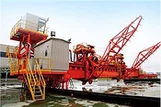
When it comes to the efficient unloading of bulk materials from ships, a Fixed Screw Ship Unloader is often a top choice for many industries. As a supplier of Fixed Screw Ship Unloaders, I understand the importance of considering various technical parameters to ensure that the equipment meets your specific needs. In this blog post, I will discuss the key technical parameters that you should take into account when choosing a Fixed Screw Ship Unloader.

Unloading Capacity
One of the most critical parameters to consider is the unloading capacity of the Fixed Screw Ship Unloader. This is typically measured in tons per hour (t/h) and indicates how much material the unloader can handle within a given time frame. The required unloading capacity depends on several factors, such as the size of the ships you are unloading, the frequency of ship arrivals, and the production requirements of your facility.

For smaller ships or facilities with lower throughput requirements, a lower-capacity unloader may be sufficient. However, if you are dealing with large vessels or have high production demands, you will need a unloader with a higher capacity. It's important to accurately estimate your future needs as well, as you may want to accommodate potential growth in your operations.
Screw Diameter and Length
The screw diameter and length are fundamental design features that significantly impact the performance of a Fixed Screw Ship Unloader. A larger screw diameter generally allows for a higher material flow rate, as it can handle more material in each rotation. However, it also requires more power to operate.
The length of the screw is determined by the depth of the ship's hold and the distance over which the material needs to be conveyed. Longer screws can reach deeper into the hold and transport the material over greater distances, but they may also be more prone to bending and require additional support. When selecting a Fixed Screw Ship Unloader, you need to choose the appropriate screw diameter and length based on the specific characteristics of the ships you will be unloading.
Power Consumption
Power consumption is an important consideration from both an operational and cost perspective. The power required to operate a Fixed Screw Ship Unloader depends on factors such as the unloading capacity, screw diameter, and the type of material being unloaded. Materials with high density or high friction coefficients may require more power to convey.

As a supplier, we strive to design our Fixed Screw Ship Unloaders with energy-efficient features to minimize power consumption. This not only reduces your operating costs but also contributes to a more sustainable operation. When evaluating different unloaders, compare their power consumption figures and look for models that offer a good balance between performance and energy efficiency.
Material Compatibility
The type of material you will be unloading is a crucial factor in determining the suitability of a Fixed Screw Ship Unloader. Different materials have different physical properties, such as particle size, density, moisture content, and abrasiveness. These properties can affect the performance and durability of the unloader.
For example, abrasive materials can cause significant wear and tear on the screw and other components of the unloader. In such cases, you may need a unloader with wear-resistant materials or special coatings to extend its service life. Similarly, materials with high moisture content may require additional measures to prevent clogging and ensure smooth operation.
Mobility and Installation
While Fixed Screw Ship Unloaders are designed to be stationary, some degree of mobility or flexibility in installation can be beneficial. Consider whether you need the unloader to be installed on a fixed pier or if it should be movable to different locations along the dock. A movable unloader can provide more flexibility in handling different ships and berthing arrangements.
The installation process also needs to be taken into account. Some unloaders may require a complex foundation and extensive civil works, while others can be more easily installed. As a supplier, we can provide you with detailed installation instructions and support to ensure that the unloader is installed correctly and safely.
Control System
A modern Fixed Screw Ship Unloader is typically equipped with an advanced control system that allows for precise operation and monitoring. The control system should provide features such as variable speed control, automatic start and stop functions, and real-time monitoring of key parameters such as motor current, screw speed, and material flow rate.
These features not only improve the efficiency and safety of the unloading process but also make it easier to manage and maintain the unloader. When choosing a Fixed Screw Ship Unloader, look for a control system that is user-friendly, reliable, and offers the functionality you need to optimize your operations.
Maintenance and Serviceability
Like any piece of industrial equipment, a Fixed Screw Ship Unloader requires regular maintenance to ensure its reliable operation and long service life. When evaluating different unloaders, consider the ease of maintenance and the availability of spare parts.
A well-designed unloader should have easy access to critical components for inspection, cleaning, and replacement. It should also be possible to perform routine maintenance tasks without the need for specialized tools or extensive training. As a supplier, we offer comprehensive maintenance services and a wide range of spare parts to ensure that your unloader operates at peak performance.
Comparison with Other Ship Unloaders
It's also worth comparing the Fixed Screw Ship Unloader with other types of ship unloaders, such as the Buried Scraper Type Ship Unloader and the Chain Bucket Ship Unloader. Each type of unloader has its own advantages and disadvantages, and the choice depends on your specific requirements.
For example, the Buried Scraper Type Ship Unloader is suitable for handling fine and powdery materials, while the Chain Bucket Ship Unloader is often used for larger-sized materials. The Fixed Screw Ship Unloader, on the other hand, is known for its high efficiency, low dust emission, and ability to handle a wide range of materials.
Conclusion
Choosing the right Fixed Screw Ship Unloader requires careful consideration of various technical parameters. By taking into account factors such as unloading capacity, screw diameter and length, power consumption, material compatibility, mobility, control system, maintenance, and comparing with other ship unloaders, you can make an informed decision that meets your specific needs.
As a supplier of Fixed Screw Ship Unloaders, we are committed to providing high-quality products and excellent customer service. If you have any questions or need further information about our Fixed Screw Ship Unloaders, please feel free to contact us for a detailed consultation and to discuss your procurement needs. We look forward to working with you to find the perfect solution for your bulk material unloading requirements.
References
- "Bulk Material Handling Handbook", John T. Conveyor, Industrial Press Inc., 2018.
- "Ship Unloading Systems: Design and Operation", Maritime Engineering Institute, 2020.