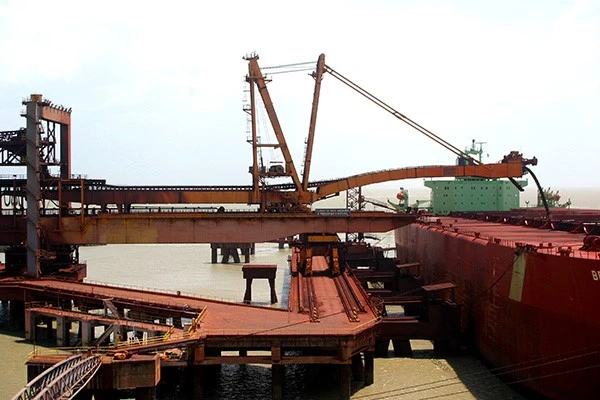
1. Shipping capacity
Determine the rated loading capacity of the loader based on the port's throughput requirements and the time schedule for loading operations. The loading capacity should match the loading and unloading rhythm of the terminal to avoid slow loading speeds that affect operating efficiency or excessive loading capacity that causes waste of equipment resources. For example, large ports have huge annual throughputs, so it is necessary to select a loader with high loading capacity and strong operating continuity.
2. Material property adaptation
The particle size, humidity, bulk density and other characteristics of bauxite will affect the working effect of the ship loader. For bauxite with larger particle size, the discharge port size and conveying channel of the ship loader must be large enough to prevent blockage; bauxite with high humidity is easy to stick together, so the anti-sticking design of the equipment needs to be considered, such as using special chute lining materials. The bulk density determines the load-bearing and conveying capacity requirements of the ship loader. 3. Equipment reliability
Choose a ship loader with a good brand reputation and mature technology. Reliable equipment can reduce the frequency of failures, reduce maintenance costs, and ensure the continuity of loading operations. Check the equipment manufacturer's production experience, user feedback, and the quality certification of the equipment, and give priority to products that have been verified by the market and have high stability.
4. Adaptability to the working environment
Consider the geographical environment and climatic conditions of the port. In coastal areas, attention should be paid to the anti-corrosion performance of the equipment, and ship loaders made of corrosion-resistant materials should be selected to prevent erosion by sea breeze and seawater. If the space in the operating area is limited, a ship loader with a compact structure and a small footprint should be selected to ensure that the equipment can operate flexibly in a limited space.
5. Automation
With the development of science and technology, automated ship loaders can improve operation accuracy and efficiency and reduce labor costs. Ship loaders with functions such as automatic control of material flow and automatic positioning of unloading positions can reduce human operating errors and improve the overall quality of loading operations. When selecting a model, choose equipment with a suitable degree of automation based on the company's technical level and management needs.
6. Maintenance convenience
Whether the daily maintenance and repair of the ship loader is convenient affects the availability of the equipment. Choose equipment that is easy to disassemble and has common parts to facilitate the replacement of wearing parts. At the same time, the equipment should have good maintenance channels and space to facilitate maintenance personnel to carry out maintenance work and shorten the equipment downtime.
If you want to know more about bauxite ship loader , please contact Wuxi Sunbird Technology . Our technical team will tailor the most suitable product solution for you.