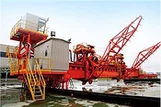
In the bustling world of global trade, ports serve as the vital gateways through which a vast majority of goods are transported. High - traffic ports, in particular, face the challenge of efficiently handling a large volume of incoming and outgoing cargo. As a supplier of Continuous Ship Unloaders (CSUs), I often encounter the question: Can a Continuous Ship Unloader be used in ports with high - traffic conditions? This blog aims to delve into this topic, exploring the feasibility, advantages, and considerations of using CSUs in such demanding environments.
Understanding Continuous Ship Unloaders
Continuous Ship Unloaders are advanced pieces of equipment designed to unload bulk materials from ships in a continuous and efficient manner. There are several types of CSUs, each with its own unique features and applications. For instance, the Catenary Bucket Unloader uses a series of buckets attached to a chain to scoop up materials and transfer them to a conveyor system. The Fixed Screw Ship Unloader relies on a rotating screw to move bulk materials from the ship's hold to the shore. And the Bucket Wheel Ship Unloader employs a large rotating wheel with buckets to pick up and discharge materials.
Feasibility in High - Traffic Ports
One of the primary reasons why CSUs are well - suited for high - traffic ports is their ability to maintain a continuous flow of material handling. In a port where ships are constantly arriving and departing, the efficiency of unloading operations is crucial. Unlike traditional grab unloaders, which operate in a batch - by - batch manner, CSUs can unload cargo at a steady rate, reducing the overall time a ship spends at the berth.
This continuous operation not only speeds up the unloading process but also allows for better planning and scheduling of port activities. Terminal operators can more accurately predict the time required to unload a ship, which is essential for coordinating the movement of multiple vessels in a high - traffic environment. For example, if a port has a schedule of several ships arriving within a short period, the use of CSUs can ensure that each ship is unloaded promptly, minimizing congestion and optimizing the use of berth space.


Advantages of Continuous Ship Unloaders in High - Traffic Ports
High Unloading Rates
CSUs are capable of achieving high unloading rates, which is a significant advantage in high - traffic ports. Depending on the type of CSU and the nature of the cargo, these machines can unload thousands of tons of bulk materials per hour. This high - speed operation helps to keep the port's throughput high, allowing it to handle a large volume of cargo in a relatively short time. For example, a large - scale Bucket Wheel Ship Unloader can unload up to 5000 tons of coal per hour, enabling ports to quickly clear ships and make way for the next vessel.
Reduced Labor Requirements
Another benefit of CSUs is their relatively low labor requirements. These machines are highly automated, which means that fewer workers are needed to operate them compared to traditional unloading methods. In a high - traffic port, where labor costs can be a significant factor, this reduction in labor can lead to substantial savings. Moreover, the automated nature of CSUs also reduces the risk of human error, improving the overall safety and reliability of the unloading process.
Minimal Dust Emissions
Many CSUs are designed with advanced dust control systems, which is an important consideration in high - traffic ports. These ports are often located in densely populated areas, and minimizing dust emissions is crucial for environmental and health reasons. By using CSUs with effective dust suppression measures, ports can reduce the impact of their operations on the surrounding community. For example, some Catenary Bucket Unloaders are equipped with enclosed conveyor systems and water spraying devices to prevent dust from escaping during the unloading process.
Considerations for Using Continuous Ship Unloaders in High - Traffic Ports
Initial Investment
One of the main challenges associated with using CSUs in high - traffic ports is the high initial investment required. These machines are complex and sophisticated pieces of equipment, and their purchase, installation, and commissioning can be costly. However, it is important to consider the long - term benefits. The increased efficiency, reduced labor costs, and improved environmental performance of CSUs can result in significant cost savings over the life of the equipment. Terminal operators should conduct a comprehensive cost - benefit analysis to determine whether the investment in CSUs is justified based on their specific port requirements.
Maintenance and Repair
CSUs require regular maintenance and occasional repair to ensure their optimal performance. In a high - traffic port, where the equipment is in constant use, the need for maintenance becomes even more critical. Terminal operators need to have a well - established maintenance plan in place, including regular inspections, lubrication, and replacement of worn - out parts. Additionally, they should have access to spare parts and technical support to minimize downtime in case of breakdowns.
Compatibility with Different Cargoes
High - traffic ports handle a wide variety of bulk cargoes, including coal, grain, ore, and cement. Different types of CSUs are better suited for specific cargoes. For example, a Fixed Screw Ship Unloader is ideal for handling free - flowing materials such as grains, while a Bucket Wheel Ship Unloader is more suitable for handling dense materials like coal and ore. Terminal operators need to choose the right type of CSU based on the cargoes they typically handle to ensure efficient and effective unloading operations.
Case Studies
Several high - traffic ports around the world have successfully implemented CSUs to improve their unloading efficiency. For example, the Port of Rotterdam, one of the busiest ports in Europe, has installed multiple CSUs to handle the large volume of coal and ore imports. These CSUs have significantly reduced the unloading time of ships, allowing the port to increase its throughput and maintain its competitiveness in the global market.
Another example is the Port of Shanghai, which has also adopted CSUs for its bulk cargo handling operations. The use of CSUs in Shanghai has not only improved the efficiency of unloading but also reduced the environmental impact of the port's operations. By minimizing dust emissions and optimizing the use of berth space, the port has been able to better meet the demands of its high - traffic environment.
Conclusion
In conclusion, Continuous Ship Unloaders can indeed be used effectively in ports with high - traffic conditions. Their ability to provide continuous and efficient unloading, along with their numerous advantages such as high unloading rates, reduced labor requirements, and minimal dust emissions, make them a valuable asset for high - traffic ports. However, terminal operators need to carefully consider the initial investment, maintenance requirements, and cargo compatibility when deciding whether to adopt CSUs.
If you are a port operator or a logistics provider looking to improve the efficiency of your unloading operations in a high - traffic port, I encourage you to contact us to discuss how our Continuous Ship Unloaders can meet your specific needs. We have a team of experts who can provide you with detailed information, technical support, and customized solutions to help you optimize your port operations.
References
- Smith, J. (2020). "Advances in Continuous Ship Unloading Technology". Journal of Port and Maritime Research.
- Johnson, A. (2019). "The Impact of Continuous Ship Unloaders on Port Efficiency". International Journal of Logistics Management.
- Brown, C. (2018). "Case Studies of High - Traffic Ports Using Continuous Ship Unloaders". Port Development Review.