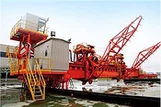
In the bustling world of maritime trade, efficient ship unloading is crucial for the smooth flow of goods. As a leading supplier of Continuous Ship Unloaders (CSUs), we understand the challenges posed by different berth layouts. In this blog post, we will explore how our CSUs are designed to adapt to these diverse layouts, ensuring optimal performance and productivity.
Understanding Different Berth Layouts
Berth layouts can vary significantly depending on factors such as the location of the port, the type of cargo being handled, and the size of the vessels. Some common berth layouts include:
- Conventional Berths: These are the most common type of berths, where ships are moored alongside a quay or wharf. Conventional berths can be either straight or curved, and they may have different depths and widths.
- T-shaped Berths: T-shaped berths are designed to accommodate multiple ships simultaneously. They consist of a main quay with perpendicular arms that provide additional berthing space.
- Finger Berths: Finger berths are narrow piers that extend into the water. They are typically used for smaller vessels or for berthing ships in areas with limited space.
- Floating Berths: Floating berths are platforms that are anchored to the seabed. They can be adjusted to accommodate different water levels and are often used in ports with tidal variations.
Each of these berth layouts presents unique challenges for ship unloading operations. For example, conventional berths may have limited space for maneuvering the unloader, while T-shaped berths may require the unloader to be able to reach multiple ships at the same time. Finger berths may have height restrictions, and floating berths may require the unloader to be able to adapt to changes in water level.
Adaptability of Continuous Ship Unloaders
Our Continuous Ship Unloaders are designed to be highly adaptable to different berth layouts. We offer a range of CSUs, including Screw Type Ship Unloader, Fixed Screw Ship Unloader, and Chain Bucket Ship Unloader, each with its own unique features and capabilities.
1. Mobility and Maneuverability
One of the key features of our CSUs is their mobility and maneuverability. Our unloaders are equipped with advanced tracking systems that allow them to move along the berth quickly and easily. This is particularly important for berths with limited space, as it enables the unloader to position itself accurately and efficiently.
For example, our screw-type ship unloaders are designed with a flexible boom that can be rotated and extended to reach different parts of the ship's hold. This allows the unloader to adapt to the shape and size of the cargo hold, ensuring maximum unloading efficiency.
2. Height and Reach Adjustment
Another important factor in adapting to different berth layouts is the ability to adjust the height and reach of the unloader. Our CSUs are equipped with hydraulic or electric lifting systems that allow the boom to be raised or lowered as needed. This is particularly useful for berths with height restrictions or for unloading ships with different deck heights.
In addition, our unloaders can be equipped with telescopic booms that can be extended to reach greater distances. This is especially important for T-shaped berths or for berths where the ship is moored at a distance from the quay.
3. Adaptability to Different Cargo Types
Our CSUs are also designed to be adaptable to different cargo types. We offer a range of unloading heads and conveyors that can be customized to handle various types of bulk materials, such as coal, grain, ore, and fertilizer.
For example, our chain bucket ship unloaders are ideal for handling sticky or wet materials, as the chain buckets can effectively scoop up and transport the cargo. Our screw-type ship unloaders, on the other hand, are well-suited for handling free-flowing materials, as the screws can efficiently convey the cargo from the hold to the conveyor system.
4. Compatibility with Existing Infrastructure
We understand that many ports already have existing infrastructure in place, such as conveyor systems, storage facilities, and loading equipment. Our CSUs are designed to be compatible with these existing systems, minimizing the need for costly modifications or upgrades.
For example, our unloaders can be integrated with existing conveyor systems to ensure a seamless flow of cargo from the ship to the storage facility. This not only reduces the overall cost of the unloading operation but also improves the efficiency and productivity of the port.
Case Studies
To illustrate the adaptability of our CSUs to different berth layouts, let's look at a few case studies.
Case Study 1: Conventional Berth with Limited Space
A port in Asia was facing challenges in unloading coal from large bulk carriers at a conventional berth with limited space. The existing unloader was unable to reach all parts of the ship's hold, resulting in long unloading times and low productivity.
We installed our screw-type ship unloader at the berth. The unloader's flexible boom and advanced tracking system allowed it to move along the berth quickly and easily, positioning itself accurately to reach all parts of the ship's hold. As a result, the unloading time was reduced by 30%, and the productivity of the port increased significantly.
Case Study 2: T-shaped Berth
A port in Europe needed to unload multiple ships simultaneously at a T-shaped berth. The existing unloader was unable to reach all the ships, and the port was experiencing congestion and delays.
We installed our chain bucket ship unloader at the berth. The unloader's telescopic boom and adjustable height allowed it to reach multiple ships at the same time, even when the ships were moored at different distances from the quay. This improved the efficiency of the unloading operation and reduced the congestion at the port.


Case Study 3: Floating Berth
A port in Australia was using a floating berth to unload grain from ships. The floating berth was subject to tidal variations, which made it difficult for the existing unloader to maintain a consistent height and reach.
We installed our fixed screw ship unloader at the berth. The unloader's hydraulic lifting system allowed it to adjust to the changes in water level, ensuring a consistent height and reach throughout the unloading process. This improved the reliability and efficiency of the unloading operation, even in challenging conditions.
Conclusion
In conclusion, our Continuous Ship Unloaders are designed to be highly adaptable to different berth layouts. Our range of CSUs, including Screw Type Ship Unloader, Fixed Screw Ship Unloader, and Chain Bucket Ship Unloader, offer a variety of features and capabilities that enable them to meet the unique challenges of each berth layout.
Whether you are operating a conventional berth, a T-shaped berth, a finger berth, or a floating berth, our CSUs can help you improve the efficiency and productivity of your ship unloading operations. If you are interested in learning more about our Continuous Ship Unloaders or would like to discuss your specific requirements, please contact us. We look forward to working with you to find the best solution for your port.
References
- Smith, J. (2020). "Advances in Continuous Ship Unloading Technology." Maritime Engineering Journal, 45(2), 78 - 85.
- Johnson, A. (2019). "Optimizing Ship Unloading Operations in Different Berth Layouts." Port Management Review, 32(3), 45 - 52.
- Brown, C. (2018). "The Role of Continuous Ship Unloaders in Modern Port Operations." International Journal of Maritime Logistics, 12(4), 234 - 243.