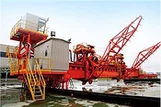
Hey there! I'm a supplier of Continuous Ship Unloaders, and today I wanna chat about how these cool machines prevent corrosion. Corrosion can be a real pain in the neck for ship unloaders, as it can mess up their performance and shorten their lifespan. So, let's dig into the ways we keep these bad boys in top - notch condition.
Understanding the Corrosion Threat
First things first, we need to know what we're up against. Continuous Ship Unloaders work in some pretty harsh environments. They're constantly exposed to saltwater, which is like a super - charged corrosion accelerator. Salt in the water acts as an electrolyte, speeding up the electrochemical reactions that cause corrosion. Plus, the high humidity near ports and the presence of various chemicals in the cargo can also contribute to the problem.
There are different types of corrosion that our unloaders might face. One common type is uniform corrosion, where the metal surface gets evenly worn down over time. Then there's pitting corrosion, which creates small holes in the metal. This is particularly dangerous because these pits can lead to structural weaknesses. Another type is crevice corrosion, which occurs in small gaps or crevices in the metal, like where two parts are joined together.
Protective Coatings
One of the most effective ways to prevent corrosion is by using protective coatings. We apply high - quality paints and coatings to the surfaces of our Continuous Ship Unloaders. These coatings act as a barrier between the metal and the corrosive environment.
For example, epoxy coatings are a popular choice. They're tough, durable, and have excellent adhesion to the metal surface. Epoxy coatings can resist the effects of saltwater, chemicals, and abrasion. We also use polyurethane coatings, which are known for their flexibility and resistance to UV radiation. This is important because the unloaders are often exposed to sunlight.
Before applying the coatings, we make sure the metal surface is properly prepared. This involves cleaning it thoroughly to remove any dirt, rust, or old paint. We might use methods like sandblasting to create a rough surface that the coating can adhere to better.
Galvanization
Galvanization is another key technique we use. It involves coating the metal with a layer of zinc. Zinc is more reactive than the base metal (usually steel), so when corrosion occurs, the zinc corrodes first, protecting the underlying metal.
There are two main types of galvanization: hot - dip galvanizing and electro - galvanizing. Hot - dip galvanizing is a process where the metal is dipped into a bath of molten zinc. This creates a thick, durable zinc coating that can provide long - term protection. Electro - galvanizing, on the other hand, uses an electric current to deposit a thinner layer of zinc onto the metal surface. It's often used for smaller parts or when a more precise coating is required.
Design Considerations
The design of our Continuous Ship Unloaders also plays a big role in preventing corrosion. We try to minimize areas where water can collect, as standing water can accelerate corrosion. For example, we design the Boom Jib with a slope so that water can drain off easily.


We also pay attention to the choice of materials. We use corrosion - resistant alloys in critical parts of the unloader. Stainless steel is a great option because it contains chromium, which forms a passive oxide layer on the surface, protecting it from corrosion.
In addition, we avoid creating tight crevices and joints where moisture can get trapped. Instead, we use proper sealing techniques to prevent water and air from getting into these areas.
Cathodic Protection
Cathodic protection is a method that involves making the metal surface a cathode in an electrochemical cell. There are two types of cathodic protection: sacrificial anode protection and impressed current protection.
In sacrificial anode protection, we attach a more reactive metal (like magnesium or aluminum) to the unloader. This sacrificial anode corrodes instead of the main metal structure. As the anode corrodes, it releases electrons that flow to the metal surface, preventing corrosion.
Impressed current protection uses an external power source to supply a direct current to the metal surface. This current counteracts the natural corrosion current, protecting the metal. We use impressed current protection for larger structures or in areas where the corrosion risk is high.
Regular Maintenance and Inspection
Even with all these preventive measures, regular maintenance and inspection are crucial. We recommend that our customers have their Continuous Ship Unloaders inspected regularly by trained professionals.
During these inspections, we check the condition of the protective coatings, look for signs of corrosion, and test the effectiveness of the cathodic protection systems. If we find any issues, we can take corrective action right away. This might involve repairing or reapplying the coatings, replacing sacrificial anodes, or adjusting the impressed current.
We also provide maintenance guidelines to our customers. This includes things like cleaning the unloader regularly to remove dirt and debris, and lubricating moving parts to prevent corrosion caused by friction.
Different Types of Continuous Ship Unloaders and Corrosion Prevention
Let's take a look at how corrosion prevention applies to different types of Continuous Ship Unloaders.
The Catenary Bucket Unloader has a complex structure with many moving parts. We focus on protecting the buckets, chains, and the frame. The buckets are often in direct contact with the cargo, which can be corrosive. So, we use special coatings on the buckets to resist abrasion and corrosion. The chains are also coated to prevent rusting, and we make sure they're properly lubricated.
The Screw Type Ship Unloader has a screw conveyor that moves the cargo. The screw is a critical part, and we use corrosion - resistant materials and coatings to protect it. We also pay attention to the bearings and seals, as any corrosion in these areas can lead to mechanical failures.
Conclusion
Preventing corrosion in Continuous Ship Unloaders is a multi - faceted approach. By using protective coatings, galvanization, smart design, cathodic protection, and regular maintenance, we can ensure that our unloaders last a long time and perform at their best.
If you're in the market for a Continuous Ship Unloader or need advice on corrosion prevention for your existing equipment, don't hesitate to reach out. We're here to help you get the most out of your investment and keep your operations running smoothly. Contact us to start a conversation about your specific needs and how we can provide the right solutions for you.
References
- Jones, D. A. (1992). Principles and Prevention of Corrosion. Macmillan Publishing Company.
- Uhlig, H. H., & Revie, R. W. (1985). Corrosion and Corrosion Control. John Wiley & Sons.