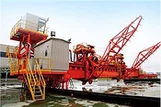
As a provider of Fixed Screw Ship Unloaders, I am often asked about how the control system of these remarkable machines operates. In this blog, I'll take you through the inner workings of the control system, explaining its components, functions, and the benefits it brings to the ship - unloading process.


1. Overview of the Fixed Screw Ship Unloader
Before delving into the control system, let's briefly understand what a Fixed Screw Ship Unloader is. It is a specialized piece of equipment designed to efficiently unload bulk materials, such as grains, coal, and minerals, from ships. The fixed screw mechanism rotates to convey the materials from the hold of the ship to a conveyor system that transports them to the storage area.
2. Components of the Control System
2.1 Sensor Network
The control system starts with a comprehensive sensor network. These sensors are strategically placed throughout the Fixed Screw Ship Unloader to monitor various parameters. For instance, load sensors are installed on the screws to measure the amount of material being conveyed. This data is crucial as it helps prevent overloading, which could lead to mechanical failures or reduced efficiency.
Proximity sensors are used to detect the position of the ship's hold and the unloader's components. They ensure that the unloader is accurately positioned above the material in the hold, optimizing the unloading process. Temperature sensors are also present to monitor the temperature of critical components, such as motors and bearings. Abnormal temperature increases can indicate potential problems, allowing for timely maintenance.
2.2 Programmable Logic Controller (PLC)
The heart of the control system is the Programmable Logic Controller (PLC). The PLC is a rugged industrial computer that receives input from the sensors and executes pre - programmed control algorithms. It processes the data from the sensors and makes decisions based on the set parameters. For example, if the load sensor detects that the screw is overloaded, the PLC can adjust the rotation speed of the screw to reduce the load.
The PLC also coordinates the movement of different components of the unloader. It controls the vertical and horizontal movement of the boom, ensuring that the screw can reach all areas of the ship's hold. Additionally, it manages the operation of the conveyor system that receives the unloaded materials, synchronizing the flow to prevent blockages.
2.3 Human - Machine Interface (HMI)
The Human - Machine Interface (HMI) is the interface through which operators interact with the control system. It typically consists of a touchscreen display that provides real - time information about the unloader's operation. Operators can monitor sensor readings, such as load, temperature, and position, on the HMI. They can also use the HMI to set operating parameters, such as the desired unloading rate or the position of the boom.
The HMI also allows operators to start, stop, and pause the unloader's operation. In case of an emergency, operators can use the HMI to trigger safety shutdowns. Moreover, it provides diagnostic information, helping operators quickly identify and troubleshoot problems.
3. Working Principles of the Control System
3.1 Initial Setup and Positioning
When the Fixed Screw Ship Unloader is brought to a ship for unloading, the control system first goes through an initial setup process. The operator uses the HMI to input the specifications of the ship, such as the size and shape of the hold. The PLC then uses this information, along with data from the proximity sensors, to position the unloader accurately above the hold.
The boom of the unloader is moved horizontally and vertically until the screw is in the optimal position to start unloading. The control system ensures that the screw is inserted into the material in the hold at the correct depth, maximizing the efficiency of the unloading process.
3.2 Unloading Process Control
Once the unloader is properly positioned, the unloading process begins. The PLC starts the rotation of the screw, and the load sensors continuously monitor the amount of material being conveyed. Based on the load readings, the PLC adjusts the rotation speed of the screw. If the load is too low, the speed can be increased to speed up the unloading process. Conversely, if the load is too high, the speed is reduced to prevent overloading.
The control system also coordinates the movement of the boom during the unloading process. As the material in the hold is depleted, the boom is gradually moved to access different areas of the hold. The proximity sensors provide real - time feedback to the PLC, allowing it to make precise adjustments to the boom's position.
3.3 Safety and Monitoring
Safety is a top priority in the operation of the Fixed Screw Ship Unloader, and the control system plays a crucial role in ensuring it. The temperature sensors continuously monitor the temperature of critical components. If the temperature exceeds a pre - set threshold, the PLC can trigger an alarm and, if necessary, shut down the unloader to prevent damage.
The control system also monitors the integrity of the conveyor system. If there is a blockage or a malfunction in the conveyor, the PLC can stop the operation of the unloader and the conveyor to prevent further damage. Additionally, the control system has emergency stop buttons that can be pressed by operators in case of an immediate danger.
4. Comparison with Other Ship Unloading Technologies
There are other types of ship unloaders available in the market, such as the Buried Scraper Type Ship Unloader, Boom Jib, and Chain Bucket Ship Unloader. Each of these technologies has its own control systems, but the Fixed Screw Ship Unloader's control system offers several advantages.
The Fixed Screw Ship Unloader's control system provides more precise control over the unloading process. The ability to adjust the screw's rotation speed based on the load ensures a more consistent and efficient unloading rate. In contrast, some other technologies may have less flexibility in adjusting the unloading rate, leading to inefficiencies or potential damage to the equipment.
The sensor network in the Fixed Screw Ship Unloader's control system is more comprehensive, allowing for better monitoring of critical parameters. This results in improved safety and reduced maintenance requirements compared to some other ship unloading technologies.
5. Benefits of the Control System
The control system of the Fixed Screw Ship Unloader brings numerous benefits to the ship - unloading operation. Firstly, it significantly improves efficiency. By precisely controlling the unloading process, the unloader can operate at its maximum capacity, reducing the time required to unload a ship. This leads to cost savings for the shipping companies and port operators.
Secondly, the control system enhances safety. The continuous monitoring of critical parameters and the ability to trigger safety shutdowns in case of emergencies protect the equipment and the operators. It also reduces the risk of accidents, such as fires or mechanical failures.
Finally, the control system simplifies the operation of the unloader. The HMI provides a user - friendly interface that allows operators with minimal training to operate the unloader effectively. The diagnostic information available on the HMI also helps in quick troubleshooting, reducing downtime.
6. Conclusion and Call to Action
In conclusion, the control system of the Fixed Screw Ship Unloader is a sophisticated and essential part of the equipment. It combines advanced sensors, a powerful PLC, and a user - friendly HMI to ensure efficient, safe, and reliable operation. If you are in the market for a ship unloader, our Fixed Screw Ship Unloader with its state - of - the - art control system is an excellent choice.
We are committed to providing high - quality products and excellent customer service. If you are interested in learning more about our Fixed Screw Ship Unloaders or would like to discuss a potential purchase, please feel free to reach out to us. We look forward to the opportunity to work with you and help you optimize your ship - unloading operations.
References
- "Handbook of Bulk Materials Handling"
- "Industrial Control Systems: Principles and Applications"