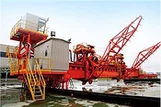
What are the limitations of a Mobile Radial Stacker?
As a supplier of Mobile Radial Stackers, I've spent a significant amount of time understanding the ins and outs of these remarkable machines. They offer tremendous flexibility and efficiency in material handling, but like any piece of equipment, they come with their own set of limitations. In this blog, I'll delve into these limitations based on real - world experiences and industry knowledge.
1. Capacity Limitations
One of the primary limitations of Mobile Radial Stackers is their capacity. Although they are designed to handle a wide range of materials, their stacking capacity is often restricted compared to larger, fixed - position stackers. The size of the conveyor belt, the power of the drive system, and the overall design of the machine place constraints on how much material can be moved and stacked within a given time frame. For instance, when dealing with large - scale operations that require the rapid stacking of high volumes of bulk materials such as coal or iron ore, a Mobile Radial Stacker may struggle to keep up. In such cases, users might find that they need to operate multiple machines simultaneously or switch to a more robust, stationary stacking solution to meet production demands.
Another aspect related to capacity is the height and radius of the stack. While modern Mobile Radial Stackers can operate with a relatively large radius and height, there are practical limits. As the height of the stack increases, the stability of the machine and the angle of repose of the material need to be carefully considered. If these factors are not properly managed, there is a risk of the material collapsing or the machine becoming unstable. This means that in some applications where extremely tall or wide stacks are required, the Mobile Radial Stacker may not be the most suitable option.
2. Terrain and Site Conditions
The mobility of Mobile Radial Stackers is one of their greatest advantages, but it also introduces limitations related to terrain and site conditions. These machines rely on a stable and relatively flat surface to operate safely and efficiently. Rough, uneven, or soft ground can pose significant challenges. For example, in a construction site with loose soil or a mining area with rocky terrain, the machine may have difficulty maneuvering, and its wheels or tracks can get stuck. This not only disrupts the stacking process but also increases the wear and tear on the machine's components.
In addition, the presence of obstacles such as buildings, trees, or other equipment can limit the movement and operation of the Mobile Radial Stacker. The machine needs a clear path to move radially and stack materials effectively. In congested sites, it may be necessary to make significant adjustments to the layout or use additional equipment to clear the way, which adds to the operational complexity and cost.


3. Weather Conditions
Weather can have a substantial impact on the performance of Mobile Radial Stackers. In extreme weather conditions, such as heavy rain, snow, or strong winds, the machine may need to be shut down for safety reasons. Rain and snow can cause the material being stacked to become wet and sticky, which can lead to blockages in the conveyor system and affect the accuracy of the stacking process. Wet materials also add extra weight to the machine, increasing the strain on its components.
Strong winds can pose a threat to the stability of the machine, especially when it is operating at its maximum radius or height. The force of the wind can cause the machine to sway or even tip over, resulting in potential damage to the equipment and endangering the safety of the operators. Therefore, in regions with harsh weather conditions, the availability and efficiency of the Mobile Radial Stacker can be significantly reduced.
4. Maintenance and Downtime
Like any mechanical equipment, Mobile Radial Stackers require regular maintenance to ensure optimal performance and longevity. However, the complexity of their design and the high - level of mobility mean that maintenance can be more challenging and time - consuming compared to stationary stackers. The moving parts, such as the conveyor belt, rollers, and drive system, need to be inspected and serviced frequently to prevent breakdowns.
Moreover, when a breakdown does occur, the downtime can be costly. Since the machine is often an integral part of the material - handling process, any interruption in its operation can lead to delays in production. The need to transport specialized maintenance personnel and parts to the site, especially if it is in a remote location, can further extend the downtime. This can be a significant drawback for businesses that rely on continuous and efficient material handling.
5. Material Compatibility
While Mobile Radial Stackers are designed to handle a variety of bulk materials, there are limitations in terms of material compatibility. Some materials may be too abrasive, corrosive, or sticky for the machine's components. For example, materials with high silica content can cause excessive wear on the conveyor belt, rollers, and other contact surfaces. Corrosive materials, such as certain chemicals or salts, can damage the metal parts of the machine over time.
Sticky materials can adhere to the conveyor belt and other components, leading to blockages and reduced efficiency. In such cases, additional measures may need to be taken, such as using special coatings on the conveyor belt or installing additional cleaning devices. These solutions can increase the cost and complexity of the operation.
Alternative Solutions
Despite these limitations, there are alternative solutions available in the market that can complement or replace Mobile Radial Stackers in certain applications. For instance, the Crawler Type Mobile Stacker Reclaimer offers enhanced mobility on rough terrains and can handle heavier loads in some cases. The Link Conveyors provide a flexible material - handling solution that can be easily integrated into different systems. The Portal - type Scraper Reclaimer is suitable for large - scale storage and retrieval of bulk materials.
If you are facing challenges with your current material - handling equipment or are in the process of planning a new project, I encourage you to reach out for a detailed discussion. Our team of experts can assess your specific requirements and help you determine the most suitable solution, whether it's a Mobile Radial Stacker or an alternative option. We are committed to providing high - quality equipment and excellent customer service to meet your business needs.
References
- Industry reports on material handling equipment
- Technical manuals of Mobile Radial Stackers
- Case studies of mobile stacker applications in different industries