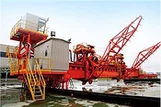
A fixed screw ship unloader is a specialized piece of equipment designed for the efficient unloading of bulk materials from ships. As a leading supplier of fixed screw ship unloaders, we understand the importance of its structure in ensuring smooth and reliable operation. In this blog, we will delve into the various components that make up the structure of a fixed screw ship unloader and explain how they work together to achieve optimal performance.
Overall Structure Overview
The fixed screw ship unloader is typically composed of several key parts, including the boom, screw conveyor, slewing mechanism, luffing mechanism, and supporting structure. Each part plays a crucial role in the overall functionality of the unloader, and their design and integration are carefully engineered to meet the specific requirements of different applications.
Boom
The boom is one of the most prominent features of a fixed screw ship unloader. It is a long, horizontal arm that extends over the ship's hold to reach the bulk materials. The boom is usually made of high - strength steel to withstand the heavy loads and stresses during operation.
At the end of the boom, there is a hopper or a suction head, depending on the type of material being unloaded. The hopper collects the bulk materials, which are then fed into the screw conveyor. The design of the boom allows for a certain degree of flexibility in terms of its reach and positioning, enabling it to access different areas of the ship's hold.
Screw Conveyor
The screw conveyor is the heart of the fixed screw ship unloader. It consists of a helical screw blade enclosed within a tube or trough. As the screw rotates, it moves the bulk materials along the conveyor from the hopper at the end of the boom towards the discharge point.


The screw conveyor is designed to handle a wide range of bulk materials, such as grains, coal, ore, and cement. The pitch and diameter of the screw blade are carefully selected based on the characteristics of the material, such as its density, flowability, and abrasiveness. For example, materials with poor flowability may require a larger pitch or a special screw design to ensure smooth transportation.
Slewing Mechanism
The slewing mechanism allows the boom of the fixed screw ship unloader to rotate horizontally. This is essential for covering a larger area of the ship's hold without having to move the entire unloader. The slewing mechanism typically consists of a large - diameter slewing bearing and a drive system, which can be either hydraulic or electric.
The slewing bearing provides a stable support for the boom while allowing it to rotate smoothly. The drive system provides the necessary power to rotate the boom at a controlled speed. By adjusting the rotation angle of the boom, the unloader can access different parts of the ship's hold, improving the efficiency of the unloading process.
Luffing Mechanism
The luffing mechanism is responsible for raising and lowering the boom of the fixed screw ship unloader. This is important for adjusting the height of the hopper or suction head to match the level of the bulk materials in the ship's hold. The luffing mechanism can be either hydraulic or mechanical.
In a hydraulic luffing mechanism, hydraulic cylinders are used to lift and lower the boom. The hydraulic system provides precise control over the movement of the boom, allowing for smooth and accurate positioning. Mechanical luffing mechanisms, on the other hand, use gears, chains, or cables to achieve the same function.
Supporting Structure
The supporting structure of the fixed screw ship unloader provides a stable base for the entire equipment. It is usually a large - scale steel structure that is firmly installed on the quay or the jetty. The supporting structure must be able to withstand the weight of the unloader, the loads from the bulk materials, and the forces generated during operation, such as wind loads and seismic loads.
The design of the supporting structure takes into account various factors, such as the location of the unloader, the type of foundation, and the environmental conditions. For example, in areas with high seismic activity, the supporting structure may need to be designed with additional reinforcement to ensure its stability.
Comparison with Other Types of Ship Unloaders
There are several other types of ship unloaders available in the market, such as the Buried Scraper Type Ship Unloader, Catenary Bucket Unloader, and Bucket Wheel Ship Unloader. Each type has its own advantages and disadvantages, and the choice of the unloader depends on the specific requirements of the application.
Compared to the buried scraper type ship unloader, the fixed screw ship unloader is more suitable for handling materials with a relatively high density and poor flowability. The screw conveyor can provide a more efficient and reliable transportation of these materials.
The catenary bucket unloader is often used for unloading materials in a continuous and high - capacity manner. However, it may not be as flexible as the fixed screw ship unloader in terms of accessing different areas of the ship's hold.
The bucket wheel ship unloader is known for its high - speed unloading capabilities. But it may cause more dust pollution during operation compared to the fixed screw ship unloader, which can be a concern in some applications.
Advantages of Our Fixed Screw Ship Unloaders
As a supplier of fixed screw ship unloaders, we offer several advantages to our customers. Our unloaders are designed with the latest technology and high - quality materials, ensuring reliable performance and long - term durability.
We provide customized solutions based on the specific needs of our customers. Whether it is the capacity, the reach of the boom, or the type of material to be unloaded, we can design and manufacture the unloader to meet the exact requirements.
Our technical support team is always ready to provide assistance during the installation, commissioning, and maintenance of the unloader. We offer training programs for the operators to ensure that they can operate the unloader safely and efficiently.
Conclusion
The structure of a fixed screw ship unloader is a complex and well - engineered system that consists of several key components, including the boom, screw conveyor, slewing mechanism, luffing mechanism, and supporting structure. Each component plays a vital role in the overall performance of the unloader.
If you are in the market for a high - quality fixed screw ship unloader, we invite you to contact us for more information. Our team of experts will be happy to discuss your requirements and provide you with a customized solution. We look forward to the opportunity to work with you and contribute to the success of your bulk material handling operations.
References
- "Bulk Material Handling Equipment Handbook" by John A. Waggoner
- "Ship Unloading Technology and Applications" by International Bulk Handling Association