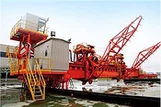
Hey there! As a supplier of Linear Swing Ship Loaders, I'm super stoked to chat with you about the lubrication requirements for these awesome machines.
Let's start by getting a quick idea of what a Linear Swing Ship Loader is. If you want to know more details, you can check out our Linear Swing Ship Loader page. These loaders are pretty nifty. They're used in ports to transfer bulk materials like coal, grain, and ore from storage areas onto ships. They've got this linear and swinging motion that makes the loading process efficient and flexible.
Now, onto the main topic - lubrication. Lubrication is like the lifeblood of a Linear Swing Ship Loader. It's crucial for keeping all the moving parts working smoothly, reducing wear and tear, and preventing breakdowns. Without proper lubrication, the loader can experience all sorts of problems, which can lead to costly repairs and downtime.
Types of Lubricants
There are different types of lubricants that can be used in a Linear Swing Ship Loader, and each has its own unique properties and benefits.
Grease
Grease is a popular choice for lubricating many parts of the loader. It's thick and sticky, which means it can stay in place for a long time and provide continuous lubrication. Grease is great for areas where there's a lot of friction, like bearings and joints. It also helps to seal out dirt and moisture, which can cause corrosion and damage to the components.
When choosing a grease, you need to consider factors like the operating temperature, load, and speed of the equipment. For example, in high - temperature environments, you'll need a grease that can withstand the heat without breaking down. Some greases are also formulated to resist water washout, which is important in a marine environment where the loader is exposed to seawater.
Oil
Oil is another common lubricant. It's more fluid than grease, which allows it to flow easily through the system and reach all the necessary parts. Oil is often used in gearboxes and hydraulic systems. In gearboxes, it helps to reduce friction between the gears, which improves efficiency and reduces noise. In hydraulic systems, oil is used to transfer power and control the movement of the loader.
Just like with grease, the type of oil you choose depends on the specific requirements of the equipment. You need to consider factors such as viscosity, which is a measure of the oil's thickness. The viscosity should be appropriate for the operating temperature and the load on the system. For example, in cold weather, you might need a lower - viscosity oil to ensure that it can flow easily, while in hot weather, a higher - viscosity oil might be required to maintain proper lubrication.
Lubrication Points
A Linear Swing Ship Loader has several key lubrication points that need to be properly maintained.


Bearings
Bearings are one of the most important components in the loader. They support the rotating and moving parts, and they need to be well - lubricated to reduce friction and prevent premature wear. There are different types of bearings in a Linear Swing Ship Loader, such as ball bearings and roller bearings. Each type has its own lubrication requirements.
For ball bearings, a small amount of high - quality grease is usually sufficient. The grease should be applied evenly to the bearing surfaces to ensure proper lubrication. Roller bearings, on the other hand, may require more grease, especially if they're operating under heavy loads.
Gears
Gears are used to transfer power and motion in the loader. They're subjected to high loads and high - speed rotation, which means they need good lubrication to prevent wear and damage. The lubricant for gears should have good anti - wear and extreme - pressure properties. Oil is often the preferred lubricant for gears, as it can flow between the gear teeth and provide continuous lubrication.
Slewing Rings
Slewing rings are used to allow the loader to swing. They're large bearings that support the upper structure of the loader. These rings need to be lubricated regularly to ensure smooth rotation. Grease is typically used to lubricate slewing rings, and it should be applied at the recommended intervals to prevent dry running and excessive wear.
Lubrication Intervals
Determining the right lubrication intervals is crucial for maintaining the performance and longevity of the Linear Swing Ship Loader. The lubrication intervals depend on several factors, such as the type of lubricant, the operating conditions, and the manufacturer's recommendations.
In general, more frequent lubrication is required in harsh operating conditions. For example, if the loader is operating in a dusty or wet environment, the lubricant may need to be changed more often to prevent contamination. Similarly, if the loader is operating at high loads or speeds, the lubricant may break down more quickly, and more frequent lubrication may be necessary.
It's also important to follow the manufacturer's guidelines for lubrication intervals. These guidelines are based on extensive testing and research, and they provide the best recommendations for keeping the loader in good working condition.
Comparison with Other Ship Loaders
It's interesting to compare the lubrication requirements of a Linear Swing Ship Loader with other types of ship loaders, like the Arc Track Ship Loader and the Fixed Swing Ship Loader.
The Arc Track Ship Loader has a different design and operating mechanism compared to the Linear Swing Ship Loader. Its lubrication requirements may vary depending on the specific components and the way it moves. For example, the arc - shaped track may require different types of lubrication to ensure smooth movement along the track.
The Fixed Swing Ship Loader, as the name suggests, has a fixed swinging motion. Its lubrication points and intervals may also be different from those of a Linear Swing Ship Loader. However, many of the basic principles of lubrication, such as using the right type of lubricant and maintaining proper lubrication intervals, still apply.
Importance of Regular Maintenance
Regular maintenance of the lubrication system is essential for the proper functioning of the Linear Swing Ship Loader. This includes checking the lubricant levels, inspecting for signs of contamination or degradation, and replacing the lubricant when necessary.
One of the key aspects of maintenance is monitoring the lubricant. You can use techniques like oil analysis to determine the condition of the lubricant. Oil analysis can detect the presence of contaminants, such as dirt, metal particles, and water, as well as changes in the lubricant's properties, like viscosity and acidity. By monitoring the lubricant, you can identify potential problems early and take corrective action before they cause major damage to the equipment.
Conclusion
So, there you have it - the ins and outs of the lubrication requirements for a Linear Swing Ship Loader. Proper lubrication is essential for keeping the loader running smoothly, reducing maintenance costs, and extending its lifespan.
If you're in the market for a Linear Swing Ship Loader or have any questions about lubrication or maintenance, don't hesitate to reach out. We're here to help you make the best choices for your port operations. Whether you're a small - scale operator or a large - scale shipping company, we've got the expertise and the products to meet your needs. Let's start a conversation and see how we can work together to optimize your loading process.
References
- Manufacturer's manuals for Linear Swing Ship Loaders
- Industry standards for lubrication in ship loading equipment
- Technical papers on lubrication and maintenance of heavy - duty machinery