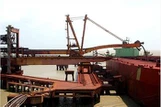
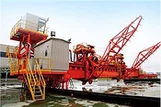
When it comes to material handling in industrial settings, conveyors play a pivotal role. They are the unsung heroes that keep production lines moving, transporting everything from raw materials to finished products. Among the various types of conveyors available, link conveyors stand out for their unique features and capabilities. As a link conveyors supplier, I am often asked about the differences between link conveyors and other types of conveyors. In this blog post, I will delve into these differences to help you understand which conveyor system is best suited for your specific needs.
Understanding Conveyor Basics
Before we dive into the differences, let's briefly understand what conveyors are and their general functions. Conveyors are mechanical devices used to transport materials from one point to another. They can be found in a wide range of industries, including manufacturing, mining, agriculture, and food processing. The main goal of a conveyor system is to improve efficiency, reduce manual labor, and ensure a smooth flow of materials within a facility.
There are several types of conveyors, each designed to handle different types of materials, weights, and distances. Some of the most common types include belt conveyors, roller conveyors, chain conveyors, and screw conveyors. Each type has its own set of advantages and disadvantages, which make them suitable for specific applications.
Link Conveyors: An Overview
Link conveyors, also known as slat conveyors, consist of a series of interconnected links or slats that are attached to a chain. These links form a continuous surface that moves materials along the conveyor path. Link conveyors are known for their durability, strength, and versatility. They can handle heavy loads, abrasive materials, and high temperatures, making them ideal for demanding industrial environments.
One of the key features of link conveyors is their ability to carry materials at different angles. Unlike some other types of conveyors, which are limited to horizontal or slightly inclined movements, link conveyors can be configured to transport materials vertically, horizontally, or at an angle. This makes them suitable for applications where space is limited or where materials need to be moved between different levels.
Another advantage of link conveyors is their flexibility. The links can be easily replaced or modified to accommodate different types of materials or to change the conveyor's configuration. This allows for quick and easy adjustments to meet changing production requirements.
Belt Conveyors
Belt conveyors are one of the most commonly used types of conveyors. They consist of a continuous belt that is driven by a motor and pulley system. The belt moves materials along the conveyor path by friction. Belt conveyors are known for their simplicity, efficiency, and low cost. They are suitable for transporting a wide range of materials, including light to medium-weight items, powders, and granular materials.
One of the main differences between link conveyors and belt conveyors is their load capacity. Belt conveyors are generally better suited for lighter loads, while link conveyors can handle much heavier loads. This is because the belt in a belt conveyor is made of a flexible material, which can stretch and sag under heavy loads. In contrast, the links in a link conveyor are made of a rigid material, which can support heavy loads without deforming.
Another difference is the type of materials that can be transported. Belt conveyors are not suitable for transporting abrasive materials or materials that can damage the belt. Link conveyors, on the other hand, can handle abrasive materials and are more resistant to wear and tear.
Roller Conveyors
Roller conveyors consist of a series of rollers that are mounted on a frame. The rollers are powered by a motor or by gravity, and they move materials along the conveyor path by rolling. Roller conveyors are known for their simplicity, reliability, and low maintenance requirements. They are suitable for transporting heavy, bulky items, such as pallets and boxes.
The main difference between link conveyors and roller conveyors is the way they transport materials. Roller conveyors rely on the rolling motion of the rollers to move materials, while link conveyors use a continuous surface to carry materials. This means that roller conveyors are better suited for transporting items that can roll easily, while link conveyors can handle a wider range of materials, including irregularly shaped items.
Another difference is the level of control over the material flow. Roller conveyors are generally less precise than link conveyors when it comes to controlling the speed and position of the materials. Link conveyors can be equipped with sensors and controls to ensure accurate positioning and speed control, which is important for applications where precise material handling is required.
Chain Conveyors
Chain conveyors consist of a chain that is driven by a motor and sprockets. The chain is used to pull or push materials along the conveyor path. Chain conveyors are known for their strength, durability, and ability to handle heavy loads. They are suitable for transporting materials in harsh environments, such as foundries and mines.
The main difference between link conveyors and chain conveyors is the way they carry materials. Chain conveyors use the chain itself to move materials, while link conveyors use a series of links or slats that are attached to the chain. This means that chain conveyors are better suited for transporting materials that can be hooked or attached to the chain, while link conveyors can handle a wider range of materials, including loose and granular materials.
Another difference is the level of noise and vibration. Chain conveyors can produce more noise and vibration than link conveyors, especially when operating at high speeds or under heavy loads. Link conveyors are generally quieter and smoother in operation, which can be an advantage in applications where noise and vibration are a concern.
Screw Conveyors
Screw conveyors consist of a rotating screw that is housed in a trough. The screw moves materials along the conveyor path by pushing them forward. Screw conveyors are known for their ability to transport materials in a confined space and for their ability to handle powders and granular materials.
The main difference between link conveyors and screw conveyors is the type of materials they can handle. Screw conveyors are best suited for transporting powders and granular materials, while link conveyors can handle a wider range of materials, including heavy, bulky items and irregularly shaped items.
Another difference is the level of flexibility. Screw conveyors are generally less flexible than link conveyors, as they are designed to transport materials in a specific direction and at a specific speed. Link conveyors can be easily configured to transport materials at different angles and speeds, which makes them more suitable for applications where flexibility is required.


Other Types of Conveyors
In addition to the types of conveyors mentioned above, there are several other types of conveyors that are used in specific applications. For example, Wheeled Bulk Reception Feeder is a type of conveyor that is used for receiving and feeding bulk materials. It is designed to handle large volumes of materials and can be easily moved to different locations.
Another example is the Half Portal Type Scraper Reclaimer, which is used for reclaiming materials from stockpiles. It is designed to operate in a large area and can handle a variety of materials, including coal, ore, and grain.
The Crawler Boom Shuttle Mobile Stacker Reclaimer is another type of conveyor that is used for stacking and reclaiming materials. It is designed to be mobile and can be easily moved to different locations to handle different types of materials.
Choosing the Right Conveyor
When choosing a conveyor system, it is important to consider several factors, including the type of materials to be transported, the weight and size of the materials, the distance the materials need to be transported, the environment in which the conveyor will operate, and the budget. By understanding the differences between link conveyors and other types of conveyors, you can make an informed decision about which conveyor system is best suited for your specific needs.
As a link conveyors supplier, I can provide you with expert advice and guidance on choosing the right conveyor system for your application. I can also offer customized solutions to meet your specific requirements. If you are interested in learning more about link conveyors or other types of conveyors, please contact me to discuss your needs. I look forward to working with you to find the best conveyor solution for your business.
References
- "Conveyor Systems Handbook" by Christopher J. Baird
- "Material Handling Equipment" by Raymond A. Sheplak
- Industry publications and research reports on conveyor technology