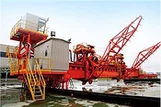
A stacker reclaimer is a large - scale machine widely used in bulk material handling operations, such as in ports, mines, and power plants. As a well - established stacker reclaimer supplier, I am deeply involved in understanding the intricate functions and components of these machines. Among the numerous components, the belt conveyor plays a crucial and multi - faceted role in the overall operation of a stacker reclaimer.
1. Material Transfer
One of the primary functions of the belt conveyor in a stacker reclaimer is material transfer. In the stacking process, the belt conveyor moving on the stacker structure picks up bulk materials from the hopper or a feeder system. These materials can range from coal, iron ore, bauxite, to grains depending on the application scenario. The design of the conveyor belt is optimized to securely hold and move these materials over significant distances.
For instance, in a coal - handling power plant, the stacker reclaimer receives coal from the arrival point. The belt conveyor then takes the coal from the receiving system and transports it to the stacking boom. As the stacker moves along the storage yard, the belt conveyor continuously unloads the coal, creating large coal piles. This way, the belt conveyor ensures a smooth and efficient flow of material from the source to the storage area.
In the reclaiming process, the situation is reversed. The belt conveyor on the reclaimer part retrieves the stored materials from the pile. This is usually achieved through the use of a reclaimer blade or a bucket wheel that loosens the materials from the pile and deposits them onto the conveyor belt. The conveyor then transports the reclaimed materials to the discharge point, such as a ship - loading system or a transportation vehicle. The Bauxite Ship Loader can be an excellent example where the belt conveyor in the reclaimer transfers the bauxite from the storage pile onto the ship - loading system for further transportation.
2. Flow Regulation
The belt conveyor also serves as a key component for regulating the flow of materials. By adjusting the speed of the conveyor belt, operators can control the amount of material being transferred per unit time. This is particularly important in maintaining a consistent supply of materials to downstream processes.

In a mining operation, the production rate of the mine may vary depending on factors such as ore quality, equipment availability, and labor. The belt conveyor in the stacker reclaimer can be adjusted to match the production rate of the mine. If the mine is producing at a high rate, the conveyor speed can be increased to quickly transfer the materials to the storage area. Conversely, if the production rate is low, the conveyor can operate at a slower speed to avoid over - stacking or under - utilization of the equipment.
Moreover, in a port environment where multiple ships may be waiting to be loaded or unloaded, the belt conveyor's flow - regulation function becomes even more critical. Operators can precisely control the amount of material being loaded onto the ships, ensuring that each ship is loaded according to its capacity and schedule.
3. Material Distribution
The belt conveyor helps in the even distribution of materials during the stacking process. The stacking boom of the stacker reclaimer is often equipped with a belt conveyor that can move in different directions, such as horizontally and vertically. This allows the conveyor to spread the materials evenly across the storage yard.
For example, in a large - scale iron ore storage facility, the stacker can move along a rail track, and the belt conveyor on the boom can pivot and raise or lower. As the conveyor moves, it deposits the iron ore in a way that forms a uniform and stable pile. Even distribution is essential to prevent the formation of uneven piles, which could lead to problems such as stability issues, difficulty in reclaiming, and reduced storage capacity.
4. Integration with Other Systems
As a stacker reclaimer supplier, I understand that the belt conveyor needs to be well - integrated with other systems within the stacker reclaimer and the overall material - handling process. It works in tandem with the drive system, control system, and the mechanical structure of the stacker reclaimer.
The drive system provides the power necessary to move the conveyor belt. Motors, gearboxes, and pulleys are carefully selected and configured to ensure reliable and efficient operation. The control system monitors and adjusts the operation of the belt conveyor, including speed, direction, and start - stop functions. It also coordinates the conveyor's operation with other components of the stacker reclaimer, such as the stacking and reclaiming mechanisms.
In addition, the belt conveyor must be compatible with the overall material - handling process. It interfaces with upstream and downstream systems, such as crushers, screens, and transportation vehicles. For example, after the reclaimed materials are transported by the belt conveyor, they may be sent to a crusher for further processing. The belt conveyor needs to deliver the materials at the right time and quantity to match the processing capacity of the crusher.
5. Flexibility and Adaptability
The design of the belt conveyor in a stacker reclaimer offers a high degree of flexibility and adaptability. Different types of conveyor belts can be selected according to the characteristics of the materials being handled. For abrasive materials like iron ore, a belt with high - wear - resistance properties may be chosen. For materials that require gentle handling, such as grains, a belt with a smooth surface and proper friction characteristics can be used.
The conveyor system can also be customized in terms of length, width, and configuration. In a large - scale port where the storage yard is extensive, a longer and wider belt conveyor may be required to handle large volumes of materials. On the other hand, in a smaller industrial facility, a more compact conveyor system can be designed to fit the space constraints.
Why Choose Our Stacker Reclaimers with Belt Conveyors
Our stacker reclaimers, equipped with advanced belt conveyors, are designed to meet the diverse needs of the material - handling industry. We use high - quality materials and the latest manufacturing techniques to ensure the reliability and durability of our equipment. Our belt conveyors are engineered to optimize material transfer, flow regulation, and distribution, providing a seamless and efficient material - handling solution.
If you are in the market for a stacker reclaimer that can provide top - notch performance, we invite you to contact us for procurement discussions. Our team of experts is ready to understand your specific requirements and recommend the most suitable stacker reclaimer and belt conveyor configuration for your business.
References
- Bulk Material Handling Handbook. (2002). McGraw - Hill.
- Singh, S. K. (2018). Principles of Material Handling. Jones & Bartlett Learning.
- Transport Equipment and Bulk Handling. (2015). Elsevier.