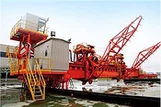
As a supplier of Mobile Ship Loaders, understanding the impact resistance of these machines is crucial. Mobile Ship Loaders are essential equipment in the shipping and bulk handling industries, designed to transfer various types of bulk materials such as coal, grains, and ores from storage facilities onto ships efficiently. The impact resistance of a Mobile Ship Loader plays a significant role in its performance, durability, and overall operational safety.
Factors Affecting Impact Resistance
Structural Design
The structural design of a Mobile Ship Loader is the first line of defense against impacts. A well - engineered structure can absorb and distribute the energy generated by impacts, minimizing damage to the machine. For example, our Arc Track Ship Loader is designed with a robust frame that can withstand significant forces. The use of high - strength steel in critical areas provides the necessary rigidity and toughness to resist impacts from falling materials or accidental collisions during operation.
The shape and configuration of the loader also affect its impact resistance. A streamlined design can reduce the drag and turbulence caused by the movement of materials, which in turn reduces the risk of sudden impacts. Additionally, the design should allow for easy access to components for inspection and maintenance, ensuring that any damage caused by impacts can be quickly identified and repaired.
Material Selection
The materials used in the construction of a Mobile Ship Loader have a direct impact on its ability to resist impacts. High - quality materials with excellent mechanical properties, such as high - strength alloys and wear - resistant steels, are commonly used. These materials can withstand the abrasive and impact forces associated with handling bulk materials.
For instance, the conveyor belts of our Mobile Ship Loaders are made of specially formulated rubber compounds that are resistant to cuts, tears, and impacts. The rollers and idlers are constructed from high - grade steel, which can support heavy loads and resist the impact forces generated by the movement of materials on the conveyor. The use of advanced materials not only improves the impact resistance of the loader but also extends its service life, reducing the need for frequent replacements.
Operating Conditions
The operating conditions of a Mobile Ship Loader can significantly affect its impact resistance. Harsh environments, such as high - humidity areas or regions with extreme temperatures, can degrade the materials and components of the loader over time, reducing its ability to resist impacts.
In addition, the type and size of the bulk materials being handled also play a role. Larger and heavier materials can generate more significant impact forces when they are loaded onto the ship. Our Linear Swing Ship Loader is designed to handle a wide range of material sizes and densities, with adjustable loading mechanisms that can adapt to different operating conditions. By adjusting the loading speed and angle, the impact forces can be minimized, protecting the loader from damage.
Importance of Impact Resistance
Equipment Durability
One of the primary benefits of a Mobile Ship Loader with high impact resistance is its increased durability. A loader that can withstand impacts is less likely to suffer from structural damage, component failures, and wear and tear. This means that the loader can operate for longer periods without major breakdowns, reducing downtime and maintenance costs.
For example, in a busy port where the Mobile Ship Loader is in continuous operation, a loader with poor impact resistance may experience frequent failures, leading to costly repairs and production delays. On the other hand, a loader with excellent impact resistance can maintain its performance over an extended period, ensuring smooth and efficient operations.
Operational Safety
Impact resistance is also closely related to operational safety. A Mobile Ship Loader that can resist impacts is less likely to experience sudden failures or malfunctions, reducing the risk of accidents and injuries to operators and other personnel in the vicinity.
For instance, if a loader's conveyor belt were to suddenly break due to an impact, it could cause a spillage of bulk materials, which could pose a hazard to workers and damage the surrounding environment. By ensuring that the loader has sufficient impact resistance, we can minimize the risk of such incidents, creating a safer working environment.


Cost - Effectiveness
Investing in a Mobile Ship Loader with high impact resistance can be cost - effective in the long run. Although the initial purchase price of a high - quality loader may be higher, the reduced maintenance costs, longer service life, and lower risk of downtime can result in significant savings over the life of the equipment.
In addition, a loader with good impact resistance can handle materials more efficiently, reducing the overall energy consumption and improving the productivity of the loading operation. This can lead to further cost savings for the end - user.
Testing and Evaluation of Impact Resistance
Laboratory Testing
To ensure the impact resistance of our Mobile Ship Loaders, we conduct extensive laboratory testing. This involves subjecting samples of the materials and components used in the loader to simulated impact forces using specialized testing equipment.
For example, we use drop - weight testers to measure the impact energy absorption capacity of materials. By dropping a weighted object onto a sample of the material from a specific height, we can determine its ability to withstand impacts. The results of these tests are used to select the most suitable materials and design the loader's structure to optimize its impact resistance.
Field Testing
In addition to laboratory testing, we also conduct field testing of our Mobile Ship Loaders. This involves installing the loader at a real - world site and operating it under normal working conditions. During field testing, we monitor the performance of the loader and collect data on the impact forces it experiences.
Field testing allows us to evaluate the impact resistance of the loader in a practical setting, taking into account the actual operating conditions and the type of bulk materials being handled. Any issues or areas for improvement identified during field testing can be addressed before the loader is put into full - scale production.
Impact Resistance and Different Types of Mobile Ship Loaders
Arc Track Ship Loader
Our Arc Track Ship Loader is designed with a unique arc - shaped track system that provides excellent stability and maneuverability. This design allows the loader to handle a wide range of ship sizes and loading positions, reducing the risk of impacts caused by misalignment.
The arc track system also distributes the weight of the loader evenly, minimizing the impact forces on the tracks and wheels. In addition, the loader's conveyor system is designed to smoothly transfer materials from the storage facility to the ship, reducing the impact forces generated during the loading process.
Linear Swing Ship Loader
The Linear Swing Ship Loader features a linear - motion design that allows for precise positioning and loading of bulk materials. The loader can swing horizontally to reach different parts of the ship, reducing the need for multiple loading positions and minimizing the risk of impacts.
The conveyor system of the Linear Swing Ship Loader is equipped with advanced control systems that can adjust the speed and flow rate of the materials, ensuring a smooth and controlled loading process. This helps to reduce the impact forces on the conveyor components and the ship.
Fixed Bulk Ship Loader
Our Fixed Bulk Ship Loader is designed for applications where a stationary loading solution is required. Despite its fixed position, the loader is still subject to impact forces during the loading process.
To improve its impact resistance, the Fixed Bulk Ship Loader is constructed with a robust structure and high - quality materials. The conveyor system is designed to handle large volumes of bulk materials with minimal impact, and the loading chute is equipped with shock - absorbing features to reduce the impact forces on the ship.
Conclusion
The impact resistance of a Mobile Ship Loader is a critical factor that affects its performance, durability, and operational safety. By considering factors such as structural design, material selection, and operating conditions, we can design and manufacture Mobile Ship Loaders that can withstand the impact forces associated with handling bulk materials.
Through extensive laboratory and field testing, we ensure that our Mobile Ship Loaders meet the highest standards of impact resistance. Whether you choose our Arc Track Ship Loader, Linear Swing Ship Loader, or Fixed Bulk Ship Loader, you can be confident in the quality and reliability of our products.
If you are interested in learning more about our Mobile Ship Loaders or have any questions regarding their impact resistance, we encourage you to contact us for a detailed discussion and potential procurement. Our team of experts is ready to assist you in finding the most suitable solution for your specific needs.
References
- "Bulk Materials Handling Handbook" by R. A. Williams
- "Materials Science and Engineering: An Introduction" by William D. Callister, Jr.
- Industry standards and guidelines for Mobile Ship Loaders published by relevant international organizations.