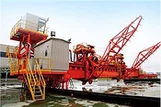
Noise pollution is an increasingly significant concern in industrial settings, and the shipping and bulk material handling sectors are no exception. As a leading supplier of Arc Track Ship Loaders, understanding the noise levels during operation is crucial for both our customers and the broader environmental and regulatory landscape. In this blog, we will delve into the noise characteristics of Arc Track Ship Loaders, exploring the factors that influence noise generation, typical noise levels, and the measures we take to minimize noise impact.


Understanding the Arc Track Ship Loader
Before we discuss noise levels, it's essential to have a basic understanding of what an Arc Track Ship Loader is. An Arc Track Ship Loader is a specialized piece of equipment used in ports and terminals to transfer bulk materials such as coal, iron ore, grains, and fertilizers from storage facilities onto ships. It features a boom that can move along an arc-shaped track, allowing for precise positioning over the ship's holds. This design provides flexibility and efficiency in loading operations, making it a popular choice in the industry.
Factors Influencing Noise Generation
Several factors contribute to the noise generated by an Arc Track Ship Loader during operation. These include:
- Mechanical Components: The moving parts of the ship loader, such as motors, gears, bearings, and hydraulic systems, generate noise as they operate. The size and power of these components can significantly impact the noise level. For example, larger motors and more complex gearboxes tend to produce more noise than smaller ones.
- Material Handling: The movement of bulk materials through the ship loader also contributes to noise. As the materials are conveyed, dropped, and loaded into the ship's holds, they create impact and friction noise. The type of material, its flow rate, and the design of the conveying system all play a role in determining the noise level.
- Operating Conditions: The operating conditions of the ship loader, such as the speed of operation, the load capacity, and the environmental conditions, can affect the noise level. Higher operating speeds and heavier loads generally result in increased noise levels. Additionally, factors such as wind, temperature, and humidity can also influence the propagation and perception of noise.
- Design and Construction: The design and construction of the ship loader can have a significant impact on its noise characteristics. Well-designed ship loaders with proper insulation, vibration damping, and noise-reducing features can minimize noise generation and transmission. On the other hand, poorly designed or maintained ship loaders may produce excessive noise.
Typical Noise Levels
The noise level of an Arc Track Ship Loader during operation can vary depending on the factors mentioned above. However, in general, the noise level at the operator's position can range from 80 to 95 decibels (dB(A)). This is equivalent to the noise level of a busy city street or a power lawnmower. At a distance of 10 meters from the ship loader, the noise level can typically range from 70 to 85 dB(A).
It's important to note that these are approximate values, and the actual noise level may vary depending on the specific model and operating conditions of the ship loader. Additionally, noise levels can be affected by the surrounding environment, such as the presence of other equipment, buildings, or natural barriers.
Noise Reduction Measures
As a responsible supplier of Arc Track Ship Loaders, we are committed to minimizing the noise impact of our products. We take several measures to reduce noise generation and transmission, including:
- Design Optimization: We use advanced design techniques and computer simulations to optimize the design of our ship loaders for noise reduction. This includes selecting low-noise components, improving the layout of the equipment, and incorporating noise-reducing features such as insulation and vibration damping.
- Soundproofing: We use high-quality soundproofing materials to reduce the noise transmission from the ship loader to the surrounding environment. This includes insulating the control cabin, the motor room, and other noise-generating areas of the equipment.
- Maintenance and Inspection: Regular maintenance and inspection of the ship loader are essential to ensure that it operates at its optimal noise level. We provide our customers with detailed maintenance instructions and offer maintenance services to keep the equipment in good working condition.
- Operator Training: We provide our customers with comprehensive operator training to ensure that they understand the proper operation and maintenance of the ship loader. This includes training on noise reduction techniques and the use of personal protective equipment (PPE) such as earplugs and earmuffs.
Comparison with Other Ship Loader Types
In addition to Arc Track Ship Loaders, there are other types of ship loaders available in the market, such as Linear Swing Ship Loaders, Fixed Bulk Ship Loaders, and Fixed Swing Ship Loaders. Each type of ship loader has its own unique noise characteristics, depending on its design and operating principles.
In general, Arc Track Ship Loaders tend to produce less noise than some other types of ship loaders, such as Fixed Bulk Ship Loaders, which typically have larger and more powerful motors. However, the noise level of a ship loader can also be influenced by factors such as the size, capacity, and operating conditions of the equipment.
Regulatory Requirements
Noise pollution is a regulated environmental issue in many countries and regions. As a supplier of Arc Track Ship Loaders, we ensure that our products comply with all relevant noise regulations and standards. This includes meeting the noise limits set by local authorities and international organizations such as the International Maritime Organization (IMO).
In addition to regulatory compliance, we also strive to exceed the minimum requirements and provide our customers with ship loaders that are designed to minimize noise impact. This not only helps to protect the environment and the health of workers and nearby residents but also enhances the reputation of our company and our products.
Conclusion
In conclusion, the noise level of an Arc Track Ship Loader during operation can vary depending on several factors, including the mechanical components, material handling, operating conditions, design, and construction of the equipment. As a leading supplier of Arc Track Ship Loaders, we are committed to minimizing the noise impact of our products through design optimization, soundproofing, maintenance, and operator training.
If you are in the market for a ship loader and are concerned about noise levels, we encourage you to contact us to discuss your specific requirements. Our team of experts can provide you with detailed information about the noise characteristics of our Arc Track Ship Loaders and help you choose the right equipment for your needs. We look forward to the opportunity to work with you and provide you with a high-quality, low-noise ship loader solution.
References
- "Noise Control in Industrial Settings." Occupational Safety and Health Administration (OSHA).
- "International Maritime Organization (IMO) Guidelines on Noise Levels on Board Ships." International Maritime Organization.
- "Bulk Material Handling Equipment Noise Reduction Techniques." Engineering Handbook.