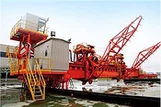
Shock resistance is a critical performance indicator for Mobile Ship Loaders, which are essential equipment in the shipping and bulk material handling industries. As a professional Mobile Ship Loader supplier, we understand the significance of shock resistance in ensuring the reliability, durability, and efficient operation of these machines. In this blog, we will delve into what shock resistance means for a Mobile Ship Loader, its influencing factors, and its importance in practical applications.
Understanding Shock Resistance in Mobile Ship Loaders
Shock resistance refers to the ability of a Mobile Ship Loader to withstand sudden impacts and vibrations without suffering significant damage or performance degradation. During the loading process, Mobile Ship Loaders are often exposed to various shock sources. For example, when large - sized bulk materials such as coal, ore, or grains are dropped onto the conveyor belt or into the loading chute, they generate impact forces. Additionally, the movement of the ship due to waves, tides, and wind can also cause the loader to experience sudden jolts and vibrations.
A Mobile Ship Loader with good shock resistance can maintain its structural integrity and normal operation under these harsh conditions. It ensures that the conveyor system, the boom structure, and other key components remain stable, preventing breakdowns and reducing the need for frequent maintenance.
Influencing Factors of Shock Resistance
Structural Design
The structural design of a Mobile Ship Loader plays a crucial role in determining its shock resistance. A well - designed structure can effectively distribute and absorb shock forces. For instance, the boom of a Mobile Ship Loader is often designed with a truss - like structure. This design not only provides high strength but also has good flexibility, which can help to dissipate the impact energy generated during the loading process.
The connection points between different components, such as the joints between the boom and the base, are also carefully designed. Reinforced welding and high - strength fasteners are used to ensure that these connections can withstand large shock loads. Moreover, shock - absorbing materials can be used at critical connection points to further reduce the transmission of shock forces.
Material Selection
The choice of materials is another important factor affecting shock resistance. High - strength steel is commonly used in the construction of Mobile Ship Loaders. This type of steel has excellent mechanical properties, including high yield strength and toughness. It can resist deformation and cracking under high - impact loads.
For the conveyor belt, special rubber materials with high abrasion resistance and shock absorption properties are often selected. These materials can reduce the impact force when bulk materials fall onto the belt, protecting the belt and the underlying support structure.
Control System
The control system of a Mobile Ship Loader also has an impact on its shock resistance. An advanced control system can adjust the operating parameters of the loader in real - time according to the loading conditions. For example, when a large - sized bulk material is detected, the control system can slow down the conveyor speed to reduce the impact force.
In addition, the control system can also monitor the vibration and stress levels of key components. If abnormal shock is detected, it can immediately issue an alarm and take corresponding protective measures, such as stopping the operation of the loader to prevent further damage.
Importance of Shock Resistance in Practical Applications
Ensuring Operational Safety
Safety is the top priority in the operation of Mobile Ship Loaders. A loader with poor shock resistance is more likely to experience structural failures, such as the breakage of the boom or the conveyor belt. These failures can not only cause equipment damage but also pose a serious threat to the safety of operators and nearby personnel.


By ensuring good shock resistance, we can minimize the risk of such accidents, creating a safer working environment for everyone involved in the loading process.
Improving Loading Efficiency
Shock - resistant Mobile Ship Loaders can operate more stably and continuously. They are less likely to be interrupted by breakdowns caused by shock, which means that the loading process can proceed smoothly. This leads to higher loading efficiency, reducing the time required for each loading operation and increasing the overall throughput of the port or terminal.
Reducing Maintenance Costs
Frequent breakdowns due to poor shock resistance will result in high maintenance costs. Components that are damaged by shock need to be repaired or replaced regularly, which not only incurs direct costs but also causes downtime, resulting in lost production.
A Mobile Ship Loader with good shock resistance has a longer service life and requires less maintenance. This can significantly reduce the total cost of ownership for the end - user.
Our Company's Solutions for High - Shock - Resistance Mobile Ship Loaders
As a leading Mobile Ship Loader supplier, we are committed to providing our customers with high - quality loaders with excellent shock resistance.
We have a team of experienced engineers who are experts in structural design. They use advanced design software to optimize the structure of our Mobile Ship Loaders, ensuring that they can withstand the most severe shock loads. Our loaders are designed with a modular structure, which allows for easy replacement of components in case of damage, further reducing maintenance time and costs.
In terms of material selection, we source high - quality materials from reliable suppliers. We conduct strict quality control on all incoming materials to ensure that they meet our high standards. Our conveyor belts are made of premium rubber materials that have been tested and proven to have excellent shock absorption and abrasion resistance.
Our control systems are state - of - the - art. They are equipped with advanced sensors and intelligent algorithms that can accurately monitor and control the operation of the loader. This enables the loader to adapt to different loading conditions and effectively reduce the impact of shock.
Types of Mobile Ship Loaders We Offer
We offer a variety of Mobile Ship Loaders to meet the different needs of our customers.
The Linear Swing Ship Loader is a versatile option. It has a linear swing function, which allows for more flexible loading operations. It can adjust the loading position accurately, reducing the impact on the ship during the loading process and improving shock resistance.
The Mobile Bulk Ship Loader is designed for handling large - volume bulk materials. It has a robust structure and a high - capacity conveyor system. Its shock - resistant design ensures stable operation even when handling heavy loads.
The Fixed Bulk Ship Loader is suitable for applications where a fixed loading position is required. It is built with high - strength materials and a well - designed shock - absorbing structure, providing reliable performance in long - term operation.
Contact Us for Purchase and Negotiation
If you are interested in our Mobile Ship Loaders and want to learn more about their shock resistance and other features, or if you have specific requirements for your loading operations, we welcome you to contact us. Our professional sales team will be happy to provide you with detailed product information and customized solutions. We look forward to the opportunity to work with you and provide you with the best Mobile Ship Loader solutions.
References
- Johnson, R. (2018). "Bulk Material Handling Equipment Design and Operation". McGraw - Hill.
- Smith, A. (2020). "Advanced Control Systems for Industrial Machinery". Wiley.
- Brown, C. (2019). "Materials Science in Heavy Equipment Manufacturing". Elsevier.