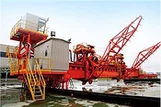
The catenary bucket unloader is a highly efficient piece of equipment widely used in bulk material handling, especially in ports for unloading various bulk cargoes from ships. One of the crucial aspects in the operation of a catenary bucket unloader is the tension control of the catenary. In this blog, as a supplier of catenary bucket unloaders, I will delve into what the tension control of the catenary in a catenary bucket unloader entails.
Understanding the Catenary in a Catenary Bucket Unloader
Before we discuss tension control, it's essential to understand what the catenary is in the context of a catenary bucket unloader. The catenary is the curve formed by the chain - bucket system that sags under its own weight between two support points. This chain - bucket system is responsible for scooping up the bulk material from the hold of the ship and transporting it to the conveyor system for further handling.
The shape and characteristics of the catenary have a direct impact on the performance of the unloader. A well - formed catenary ensures smooth and efficient material handling, while an improper catenary can lead to various problems such as reduced unloading capacity, increased wear and tear on the equipment, and even operational failures.
Importance of Tension Control
Tension control of the catenary is of utmost importance for several reasons. Firstly, proper tension ensures the stability of the chain - bucket system. If the tension is too low, the catenary will sag excessively, which may cause the buckets to lose contact with the material or get stuck in the hold. On the other hand, if the tension is too high, it can put excessive stress on the chain, leading to premature wear and potential breakage.
Secondly, tension control affects the unloading efficiency. An optimally tensioned catenary allows the buckets to pick up the material uniformly and smoothly. This results in a continuous flow of material from the ship's hold to the conveyor, maximizing the unloading rate.
Thirdly, it has a significant impact on the service life of the equipment. By maintaining the right tension, we can reduce the mechanical stress on the chain, buckets, and other components of the catenary system. This helps to minimize the frequency of maintenance and replacement, thereby reducing the overall operating costs.
Factors Affecting Catenary Tension
Several factors can influence the tension of the catenary in a catenary bucket unloader.
- Load on the Chain - Bucket System: The amount of material being scooped up by the buckets at any given time directly affects the tension. As the load increases, the catenary tends to sag more, and the tension needs to be adjusted accordingly.
- Speed of Operation: The operating speed of the unloader also plays a role. A higher speed can cause dynamic forces to act on the chain - bucket system, which may change the tension. For example, sudden acceleration or deceleration can create shock loads that affect the catenary tension.
- Length of the Catenary: The distance between the support points of the catenary determines its length. A longer catenary is more prone to sagging and requires different tension settings compared to a shorter one.
- Environmental Conditions: Factors such as temperature, humidity, and wind can also impact the catenary tension. For instance, in cold weather, the chain may contract, increasing the tension, while strong winds can cause the catenary to swing and change its shape.
Tension Control Methods
There are several methods available for controlling the tension of the catenary in a catenary bucket unloader.
- Mechanical Tensioning Devices: These include spring - loaded tensioners and hydraulic tensioners. Spring - loaded tensioners use the elastic force of springs to maintain a certain tension on the chain. They are relatively simple and cost - effective but may have limitations in terms of the range of tension adjustment. Hydraulic tensioners, on the other hand, offer more precise control and can handle higher loads. They work by using hydraulic pressure to adjust the position of a tensioning pulley, which in turn changes the tension of the chain.
- Automatic Tension Control Systems: These systems use sensors to monitor the tension of the catenary in real - time. Based on the sensor data, a control unit can automatically adjust the tensioning device to maintain the optimal tension. For example, load cells can be installed on the chain to measure the tension, and the control system can then send signals to a hydraulic tensioner to make the necessary adjustments.
- Operator - Controlled Adjustment: In some cases, operators can manually adjust the tension based on their experience and visual inspection of the catenary. However, this method is less accurate and more reliant on the operator's skills and judgment.
Our Solutions as a Catenary Bucket Unloader Supplier
As a leading supplier of catenary bucket unloaders, we offer a comprehensive range of solutions for catenary tension control.
We integrate advanced automatic tension control systems into our unloaders. These systems are designed to provide accurate and real - time tension monitoring and adjustment. Our sensors are highly sensitive and reliable, ensuring that the tension is always maintained within the optimal range.
In addition, we use high - quality mechanical tensioning devices, such as state - of - the - art hydraulic tensioners. These devices are built to withstand heavy loads and harsh operating conditions, providing long - term and stable tension control.
We also offer customized solutions based on the specific requirements of our customers. Whether it's a small - scale operation or a large - scale port project, we can design and manufacture catenary bucket unloaders with the most suitable tension control systems.
Comparison with Other Types of Ship Unloaders
When comparing catenary bucket unloaders with other types of ship unloaders such as Boom Jib, Chain Bucket Ship Unloader, and Bucket Wheel Ship Unloader, the catenary tension control in catenary bucket unloaders has its unique advantages.
The catenary bucket unloader's tension control system allows for a more flexible and adaptable operation. Unlike some other unloaders, the catenary can adjust to different shapes and sizes of the ship's hold, and the tension control ensures that the material handling process remains efficient throughout. In contrast, boom jib unloaders may have limitations in terms of their reach and the ability to handle unevenly distributed materials. Chain bucket ship unloaders may face challenges in maintaining a consistent flow of material without proper tension control, and bucket wheel ship unloaders may be more suitable for certain types of materials but may not be as effective in handling fine - grained or sticky materials as catenary bucket unloaders.
Conclusion
In conclusion, the tension control of the catenary in a catenary bucket unloader is a critical aspect that directly affects the performance, efficiency, and service life of the equipment. By understanding the factors affecting catenary tension and implementing appropriate control methods, we can ensure smooth and reliable operation of the unloader.
As a supplier of catenary bucket unloaders, we are committed to providing the best - in - class solutions for catenary tension control. Our advanced technologies and customized services can meet the diverse needs of our customers in various industries.


If you are interested in our catenary bucket unloaders or have any questions about catenary tension control, we invite you to contact us for further discussion and procurement negotiation. We look forward to working with you to achieve efficient and cost - effective bulk material handling solutions.
References
- "Handbook of Bulk Material Handling Equipment"
- "Research on the Tension Control of Catenary Systems in Material Handling"
- "Advanced Technologies in Ship Unloading Equipment"