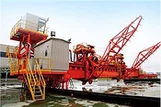
Hey there! I'm a supplier of Arc Track Ship Loaders, and today I wanna talk about how the power distribution system of an Arc Track Ship Loader is designed. It's a pretty cool topic, and I'm excited to share my knowledge with you.
First off, let's understand what an Arc Track Ship Loader is. It's a piece of heavy - duty equipment used in ports to load bulk materials like coal, ore, and grains onto ships. The power distribution system is the heart of this machine, as it ensures that all the components get the right amount of power to function properly.
Initial Considerations in Design
When we start designing the power distribution system, the very first thing we look at is the power requirements of the different parts of the Arc Track Ship Loader. The loader has various motors for things like the conveyor belts, the slewing mechanism, and the boom lift. Each of these motors has its own power needs. For example, the conveyor belt motors need a continuous supply of power to keep the material moving at a steady pace. The slewing mechanism, which allows the loader to rotate, might need a higher initial power surge when it starts moving.
We also have to think about the environmental conditions at the port. Ports can be harsh places, with high humidity, saltwater exposure, and extreme temperatures. So, the power distribution components need to be able to withstand these conditions. We use corrosion - resistant materials for the enclosures and make sure all the connections are well - sealed to prevent moisture from getting in.
Power Sources
The power for an Arc Track Ship Loader can come from different sources. One common source is the on - site electrical grid. Most ports have a well - established electrical infrastructure, and it's convenient to connect the loader directly to the grid. However, we need to make sure that the grid can provide enough power without causing any issues. Sometimes, we have to work with the port authorities to upgrade the grid if necessary.
Another option is using generators. Generators can be a great backup in case of a grid failure. They can also be used in remote ports where the grid connection is unreliable or non - existent. We choose generators based on the power requirements of the loader. Diesel generators are quite popular because they are relatively easy to maintain and can provide a large amount of power.


Distribution Panels and Switchgear
Once we've determined the power source, we move on to the distribution panels and switchgear. The distribution panels are like the nerve centers of the power distribution system. They receive the power from the source and distribute it to different parts of the loader. We design the panels in a modular way, so it's easy to add or remove circuits if needed.
The switchgear is used to control and protect the electrical circuits. It can turn the power on and off, isolate faulty circuits, and protect against over - current and short - circuits. We use high - quality switchgear that can handle the high currents and voltages associated with the loader. For example, circuit breakers are installed to automatically cut off the power in case of an overload or short - circuit, preventing damage to the equipment and ensuring the safety of the operators.
Cabling and Wiring
Cabling and wiring are crucial parts of the power distribution system. The cables need to be able to carry the required amount of current without overheating. We use cables with appropriate cross - sectional areas based on the power requirements of the connected equipment.
The wiring layout is also carefully planned. We try to keep the cables as short as possible to reduce power losses. In addition, we separate the power cables from the control cables to prevent interference. The cables are installed in cable trays or conduits to protect them from mechanical damage and environmental factors.
Safety Features
Safety is a top priority when designing the power distribution system. We install various safety features to protect the operators and the equipment. Grounding systems are essential to prevent electrical shocks. All the metal parts of the loader that could potentially become energized are connected to the ground.
We also have emergency stop buttons at strategic locations on the loader. When pressed, these buttons immediately cut off the power to all the critical components, stopping the loader's operation. Over - temperature sensors are installed in the motors and other high - power components. If the temperature exceeds a safe limit, the sensors send a signal to the control system, which can then take appropriate action, such as shutting down the component.
Monitoring and Control
In modern Arc Track Ship Loaders, we also incorporate monitoring and control systems into the power distribution system. These systems allow us to keep an eye on the power consumption, voltage levels, and the status of the various components. We can use sensors to collect data and transmit it to a central control room.
The control system can then adjust the power distribution based on the real - time requirements. For example, if one of the motors is using less power than expected, the system can re - allocate the power to other components. This not only improves the efficiency of the loader but also helps in reducing energy consumption.
Comparison with Other Ship Loaders
When we talk about ship loaders, there are other types like the Linear Swing Ship Loader, Mobile Bulk Ship Loader, and Fixed Bulk Ship Loader. Each of these has its own power distribution characteristics.
The Linear Swing Ship Loader, for instance, might have a different power distribution pattern because of its linear movement. The power requirements for its swing mechanism and conveyor belts might be different from those of an Arc Track Ship Loader. The Mobile Bulk Ship Loader, being mobile, needs a more flexible power distribution system that can adapt to different locations. And the Fixed Bulk Ship Loader, as the name suggests, has a more stationary setup, which might allow for a simpler power distribution design in some aspects.
Conclusion
Designing the power distribution system of an Arc Track Ship Loader is a complex but rewarding process. It requires a good understanding of the loader's functions, the environmental conditions, and the power requirements. We have to balance factors like efficiency, safety, and reliability.
If you're in the market for an Arc Track Ship Loader or are interested in learning more about our power distribution system designs, don't hesitate to reach out. We're always ready to have a chat about your specific needs and how we can provide the best solution for you. Whether you're a port operator or involved in the shipping industry, we can work together to ensure that your loading operations are smooth and efficient.
References
- Electrical Engineering Handbook for Heavy - Duty Equipment, 3rd Edition
- Guidelines for Power Distribution in Marine Environments