As a seasoned supplier of Link Conveyors, I am often asked about the maximum speed for transporting different materials. This is a crucial question as the speed not only affects the efficiency of material handling but also the safety and longevity of the conveyor system. In this blog, we will delve into the factors that determine the maximum speed for various materials on Link Conveyors and provide some practical insights.
Factors Influencing Conveyor Speed
The maximum speed for transporting materials on Link Conveyors is influenced by several factors. First and foremost is the type of material being transported. Different materials have different physical properties such as density, particle size, and flowability, which can significantly impact the conveyor's speed.
For instance, fine - grained materials like cement or flour are more prone to dust generation at high speeds. If the conveyor moves too fast, the dust can become airborne, creating environmental and health hazards. Additionally, these fine materials may also stick to the conveyor belt, causing blockages and reducing the efficiency of the system.
On the other hand, large - sized and heavy materials such as rocks or logs require more power to move. The conveyor belt needs to have sufficient strength and stability to support the weight of these materials at speed. If the speed is too high, there is a risk of the materials slipping or falling off the conveyor, which can damage the equipment and pose a safety threat to the operators.
Another important factor is the design and construction of the Link Conveyor itself. The length of the conveyor, the type of belt used, and the power of the drive system all play a role in determining the maximum achievable speed. Longer conveyors may require slower speeds to maintain consistent material flow, while a high - power drive system can support faster movement.


Maximum Speeds for Common Materials
1. Granular Materials
Granular materials such as sand, gravel, and salt are relatively free - flowing and can be transported at relatively high speeds. For well - graded sand with a particle size ranging from 0.075 mm to 4.75 mm, a Link Conveyor can typically operate at speeds between 1.5 to 3 meters per second. This speed range allows for efficient transportation while minimizing the risk of material spillage.
Gravel, which has larger particle sizes, may have a slightly lower maximum speed. Depending on the size and shape of the gravel particles, speeds between 1 to 2 meters per second are often recommended. This ensures that the gravel remains stable on the conveyor belt and does not cause excessive wear on the belt surface.
2. Powdery Materials
Powdery materials like cement, lime, and talc are more challenging to transport at high speeds. As mentioned earlier, dust generation is a major concern. For cement, a maximum speed of around 0.8 to 1.2 meters per second is usually advisable. This slower speed helps to keep the dust under control and prevents the material from caking on the belt.
Talc, which is a very soft and fine powder, may require even slower speeds, typically in the range of 0.5 to 1 meter per second. This ensures that the material is transported smoothly without creating a significant dust cloud.
3. Bulk Solids
Bulk solids such as coal, ore, and wood chips have different characteristics. Coal, for example, can be transported at speeds of 1.5 to 2.5 meters per second, depending on its size and moisture content. Higher moisture content may reduce the speed slightly to prevent the coal from sticking to the belt.
Ore, which is often denser and heavier than coal, may have a lower maximum speed of 1 to 2 meters per second. This is to ensure that the conveyor can handle the weight of the ore without overloading the drive system.
Wood chips are relatively light and can be transported at speeds between 2 to 3 meters per second. However, care must be taken to prevent the chips from getting caught in the conveyor's moving parts.
Specialized Conveyor Systems for Different Materials
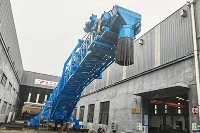
In addition to standard Link Conveyors, there are specialized conveyor systems that can be used to transport materials more efficiently. For example, the Telescopic Mobile Belt Conveyor is a great option for handling bulk materials in a flexible and adjustable manner. It can be extended or retracted as needed, allowing for easy loading and unloading of materials at different locations.
The Mobile Radial Stacker is another useful tool for stacking bulk materials. It can rotate radially, creating large stockpiles of materials such as coal, ore, or grains. This system can operate at speeds suitable for the material being stacked, typically in the range of 1 to 2 meters per second.
The Mobile Hopper Feeders are designed to provide a controlled flow of materials onto the conveyor. They can be adjusted to match the speed of the conveyor, ensuring a consistent and efficient material transfer process.
Safety Considerations
When determining the maximum speed for transporting materials on Link Conveyors, safety should always be the top priority. High - speed operation can increase the risk of accidents such as belt slippage, material spillage, and equipment failure. Therefore, it is essential to conduct regular maintenance checks on the conveyor system to ensure that all components are in good working condition.
Operators should also be trained to handle the conveyor at different speeds and to recognize the signs of potential problems. Safety guards and emergency stop buttons should be installed on the conveyor to prevent accidents and protect the operators.
Conclusion
In conclusion, the maximum speed for transporting different materials on Link Conveyors depends on a variety of factors, including the type of material, the conveyor's design, and safety considerations. By understanding these factors, you can optimize the speed of your conveyor system to improve efficiency and productivity.
If you are in the market for a Link Conveyor or any of our other specialized conveyor systems, we invite you to contact us for a detailed consultation. Our team of experts can help you select the right conveyor system for your specific needs and ensure that it operates at the optimal speed for your materials.
References
- ASME B20.1 - Safety Standard for Conveyors and Related Equipment
- CEMA (Conveyor Equipment Manufacturers Association) Handbook
- ISO 5048 - Conveyor belts - Determination of apparent modulus of elasticity and calculation of the elongation under load